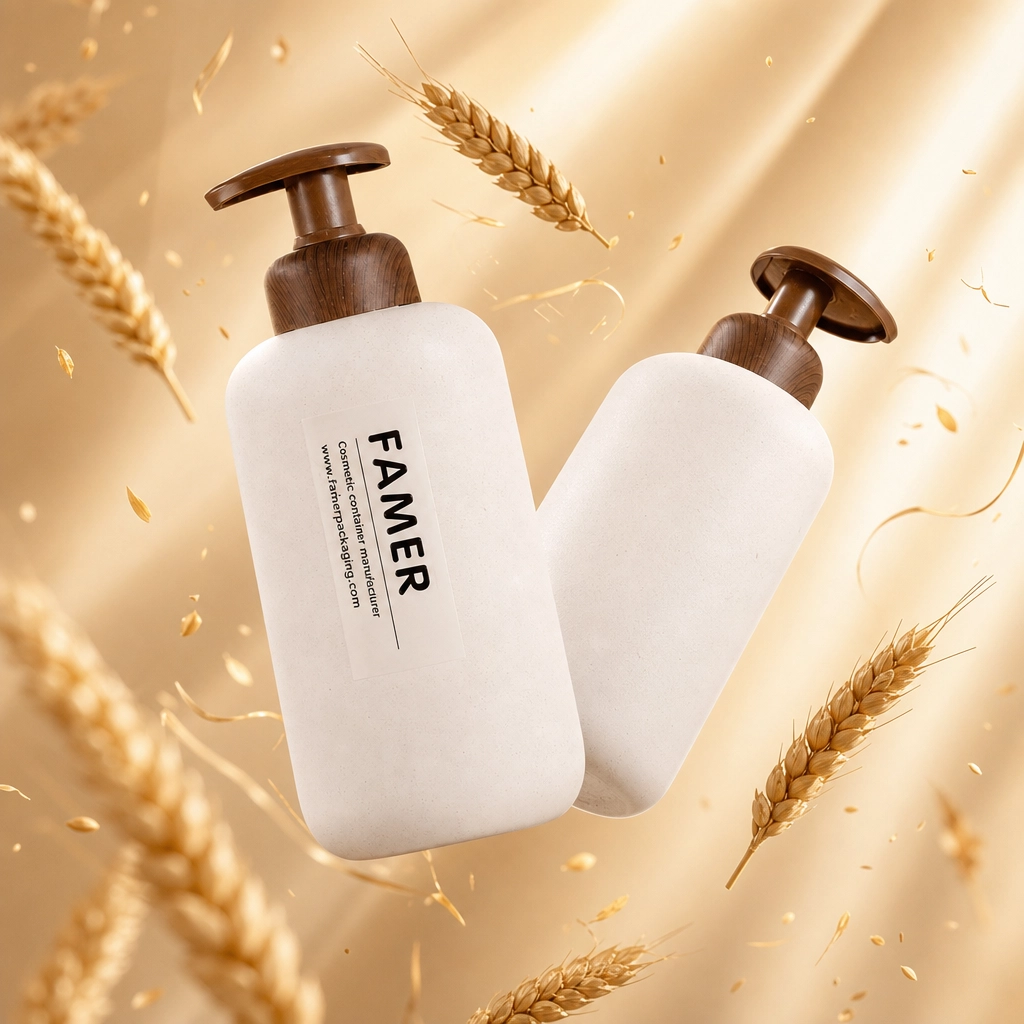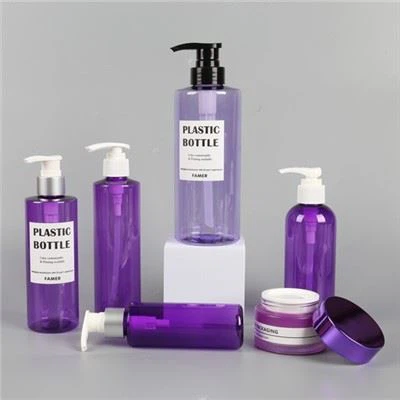

A lotion bottle has to protect the formula, dispense a usable dose and survive the journey from filling line to bathroom shelf. A clear bottle may suit the brand, yet offer too little light protection. A pump may fit the neck and still struggle to deliver a thick cream.
Start with the formula and use conditions. Shortlist compatible materials, choose the dispenser and capacity together, then check component fit and test the filled pack. Once those choices are workable, compare stock and custom options against your budget and launch schedule.
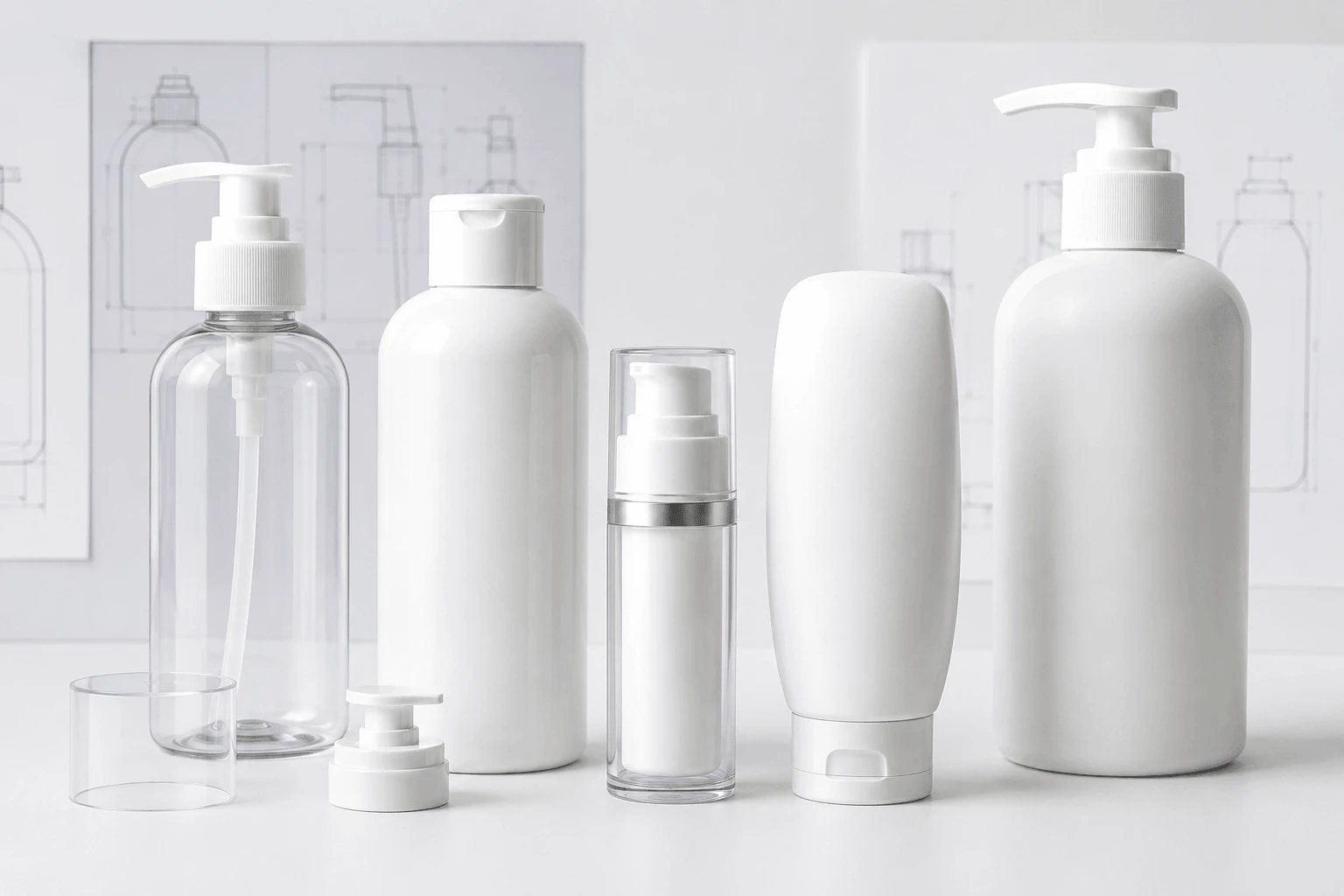
Figure 1. Examples of lotion packaging formats. Appearance alone does not establish material, capacity or compatibility.
A quick lotion bottle shortlist
Use these options to begin sampling. Each combination needs confirmation with the intended formula and production components.
|
Product requirement |
Options to evaluate |
|
Light facial lotion |
Controlled-dose cosmetic pump; airless if formula protection justifies it. |
|
Everyday body lotion |
Compatible PET or HDPE bottle with a lotion pump. |
|
Thick cream or body product |
A pump suitable for the formula, a squeeze format or a wider dispensing opening. |
|
Oxygen-sensitive formula |
Evaluate airless or other protective construction against the formula requirements. |
|
Light-sensitive formula |
Evaluate light protection separately from the dispensing mechanism. |
|
Travel or frequent professional use |
Secure closure and leakage performance for travel; durable components and an efficient dose for professional use. |
Start with the formula and use conditions
Ask the formulator how the product flows, what can affect its stability and how long the filled pack needs to perform. Include known concerns involving alcohol, fragrance or essential oils, unusual pH, and ingredients sensitive to light or oxygen.
How viscosity affects dispensing
A fluid facial lotion can pass through a dispensing path that gives a dense body cream trouble. Medium-viscosity lotions are often candidates for conventional pumps; thicker products need closer attention to priming, recovery and product evacuation. Viscosity affects the whole path through the dip tube, pump chamber and outlet.
Dose is a separate choice. A thick product can suit a low-output pump when the mechanism can handle it and the dose matches the application. Aptar lists EuroMist Cardinal Lotion for high-viscosity formulas with a nominal output of 190 microliters, or 0.19 mL. Its specification also recommends compatibility testing. [1]
Which parts contact the formula
Review the bottle body together with the pump housing, internal components, seals, dip tube and closure. Include coatings or decoration where contact is relevant. Approval of the bottle resin does not establish compatibility of every other contact material.
Define the use conditions before choosing samples. A salon pack may be actuated repeatedly throughout the day. Travel packaging may lie on its side, while a bathroom bottle needs to be manageable with wet hands. Filling, storage and distribution can expose the package to conditions that differ from normal consumer use.
Compare PET HDPE PP and glass
Compare materials after identifying the protection and compatibility requirements. The table gives broad selection considerations; resin grade, bottle design and the assembled package can change the result.
|
Material |
Reasons to consider it |
What to check |
|
PET |
Clarity and a relatively rigid plastic presentation. |
Formula compatibility, required light protection and available bottle geometry. |
|
HDPE |
Tough handling and natural or opaque formats; worth evaluating for squeeze and larger packs. |
Selected resin grade, actual squeezability and compatibility. Chemical resistance is not universal. |
|
PP |
An option in specific bottle constructions; also used in pumps and closures. |
Availability of the required bottle design and the performance of all contact components. |
|
Clarity and a heavier presentation where that suits the product. |
Breakage, shipping weight, component compatibility and handling. It cannot be squeezed. |
Transparency, weight and appearance should be assessed on the actual sample. A material name does not establish a premium position or guarantee recyclability. Compare the complete pack, including its pump and decoration, against the recycling system in the destination market.
If recycled content is required, specify the post-consumer recycled (PCR) percentage, acceptable color variation and performance requirements. Confirm that the supplier can maintain the selected grade at the planned order volume. Multilayer or specialized structures should have a defined benefit for the formula or distribution conditions.
Choose the dispenser and capacity together
The dispenser controls access to the product and influences how quickly the consumer uses the pack. Capacity affects grip, component proportions and the number of doses available. Reviewing them together avoids an awkward combination, such as a large salon bottle with a pump that requires too many strokes per application.

Figure 2. Dispensing formats shown from left to right: conventional pump, airless-style dispenser, flip-top, disc-top and inverted squeeze format. These are format illustrations, not verified component specifications.
Lotion pumps
Conventional lotion pumps suit many pumpable body lotions, moisturizers and hand-care products. A useful purchase specification identifies the complete neck finish, desired output, formula characteristics, locking requirement, dip tube and any component-material restrictions.
Two pumps with the same actuator shape can have different chamber volumes, seals, product pathways and spring arrangements. Those differences can affect actuation force, priming, leakage and dose. Send performance requirements with a reference image when asking a supplier to match a pump.
If your sample pump will not unlock or dispense, our guide on: how to open a pump bottle covers common problems and troubleshooting steps.
Airless systems
Airless systems are worth evaluating when controlled evacuation or reduced repeated exposure to outside air matters. Confirm the filling method, dose, capacity and cost alongside the formula requirements. Light protection still needs a separate assessment.
Aptar reports that Sisley selected its Irresistible airless packaging for a sensitive-skin cream. The supplier describes a system designed for formulas with little or no preservatives, with additional barrier technology and a coordinated processing approach. That example concerns a specific package and formula; selecting a generic airless bottle does not establish equivalent protection. [2]
Flip-top disc-top and squeeze formats
A dispensing closure can be suitable when the bottle is squeezable and the formula flows cleanly through its opening. Some thicker products also suit squeeze packaging. Check the opening against the actual formula: too small can make dispensing difficult, while too large can make the amount hard to control.
Match size to the customer and sales channel
Start with consumption per application, expected repurchase interval and retail positioning. The following ranges are planning examples, with intentional overlap between uses. They are not fixed size standards or evidence of travel-rule compliance.
|
Use |
Capacity to investigate |
Selection priorities |
|
Trial and discovery |
10 to 100 mL |
Usable fill volume, component proportions and space for labeling. |
|
Facial skincare |
30 to 100 mL |
Dose control, formula protection and the desired presentation. |
|
Everyday retail lotion |
100 to 300 mL as an initial range |
Use rate, shelf footprint and price positioning. |
|
Frequent-use body care |
200 to 500 mL |
Grip, stability and a practical dose per application. |
|
Salon or professional use |
500 mL to 1 L or larger |
Pump durability, efficient dosing and shipping weight. |
A 200 to 500 mL body-lotion shortlist can extend beyond the initial retail range because body use and repurchase expectations differ from facial care. Choose within those ranges using the product brief, rather than treating the category as a specification.
For e-commerce, give the filled pack and its shipping configuration a defined distribution test requirement. For retail, assess decoration area and shelf footprint. For travel, examine closure security and leakage under expected handling conditions. Destination-market documentation and packaging requirements should be stated in the RFQ so the supplier can respond to the actual brief.
Confirm the bottle neck and closure fit
Use the full neck-finish designation when selecting a pump or closure. For example, the 250 mL tall square PET bottle listed on Amcor's packaging site specifies a 24 mm neck diameter, a 410 neck thread and a 24/410 finish. The full designation identifies more than an approximate opening diameter. [3]
Ask for matching bottle and closure drawings. The 410 portion should not be treated as a simple count of threads. A closure that screws on still needs checks for thread engagement, sealing contact, assembly consistency and leakage. Review torque behavior where applicable.
Use components intended for production when approving the combination. One hand-selected sample does not show how normal manufacturing tolerances affect fit. If the bottle and pump come from different sources, agree who will verify the assembled pack. Mechanical fit and formula dispensing performance both need approval.
Specify dip tube length and pump output
Dip tube length
Confirm the bottle and pump first, then use the supplier's measurement reference. Internal base shape, shoulders, pump geometry and the tube cut can affect the required length, so a universal deduction from external bottle height is unreliable.
A short tube can leave more product inaccessible. Excess length can cause bending or inconsistent contact with the base. Cut and assemble the proposed tube, then test product pickup in a filled sample, including as the pack empties.
If a pump stops dispensing while lotion remains in the bottle, see our guide on :How to get lotion out of a bottle: safe methods and better packaging solutions

Figure 3. Illustrative differences in dip tube length. Left: short tube. Center: straight tube reaching the base. Right: tube bent along the base. No panel establishes an approved length; acceptance depends on bottle geometry, tube cut and filled-pack performance.
Output per stroke
Select output around the amount the user needs and the number of comfortable actuations per application. Bottle capacity and formula viscosity cannot determine this on their own.
Published pump outputs illustrate the range. EuroMist Cardinal Lotion is listed at 0.19 mL, while Aptar's HDP dispensing pump is listed at 3.5 cc, equivalent to 3.5 mL. These are product-specific nominal specifications, not universal lotion-pump settings. [1, 4]
Check the output with the intended formula. Record priming, dose consistency over repeated strokes, recovery, sputtering and actuation force. A catalog output is useful for shortlisting; the assembled sample shows whether that output remains suitable in use.
Test the filled packaging system before production
Agree the test plan with the formulator, packaging engineer or QA team before approving samples. Define the final components, conditions, duration and acceptance criteria. Use the filled, assembled pack whenever the objective is to approve finished-pack performance.
|
Test area |
Observations to include |
|
Formula compatibility |
Changes to the formula or contact components, including swelling, deterioration, deformation and altered dispensing. |
|
Sealing and leakage |
Leakage at the neck, closure or pump under relevant storage, handling and distribution conditions. |
|
Dispensing |
Priming, delivered dose, repeatability, recovery, sputtering, actuation force and product pickup. |
|
Storage and aging |
Formula appearance, sealing, component changes and dispensing after storage. |
|
Distribution |
Performance of the filled pack and shipping configuration against the applicable transport hazards. |
|
Decoration and filling |
Finish durability under expected use, assembly consistency and filling-line compatibility where relevant. |
Distribution testing
ISTA distinguishes screening tests, partial simulations and general simulations; its 3-Series procedures address transport hazards through general simulation. Select a procedure for the actual distribution channel and shipping configuration. ASTM D4169 also provides a framework for evaluating shipping units through specified test sequences. [5, 6]
A supplier's test result needs to be read with its conditions. Aptar notes on its HDP page that ISTA-6 overbox results may vary with container shape, size and the sample formula. A different bottle-and-formula combination therefore needs its own assessment. [4]
Storage and aging
A pack that works on filling day may change during storage. Observe the formula, bottle and components as well as sealing, decoration and dispensing. Accelerated studies require a technically justified protocol and qualified interpretation; an arbitrary number of days cannot establish shelf life.
Keep the records tied to the approved component specifications. A passing transport test answers a different question from formula compatibility or storage stability, so record the outcome of each required assessment separately.
Assess sustainability across the complete pack
Include the pump, seals, labels and decorative finishes when comparing environmental options. Mixed polymers and metal parts can affect compatibility with a recycling stream. The Association of Plastic Recyclers' Design Guide is a reference for evaluating packaging features in relation to the primary container material. [7]
For PCR, request a defined percentage and evidence of sourcing, alongside color, performance and supply requirements. APR also provides PCR certification information. A recycled-content specification and a claim about recyclability answer different questions. [8]
Ask how the whole pack will be collected, sorted and processed in the destination market. A mono-material claim alone does not establish that local recycling facilities accept the item.
Refill or material reduction
Compare a refill concept against realistic reuse. Consider whether refills will remain available, how cleaning works, the additional refill packaging and the number of times the heavier primary pack will be used. Transport also affects the comparison. Material reduction may be more practical for a project whose customers are unlikely to reuse the original container.
Choose stock packaging or a custom mold
Stock bottles can reduce tooling commitment and speed up sampling for first launches, market tests or shorter schedules. They can also leave room for differentiation through color and decoration. Minimum order quantities still depend on the bottle, pump configuration, finish and supplier.

Figure 4. Illustrative customization paths: an undecorated bottle, a decorated bottle and a distinctive bottle shape. Confirm tooling requirements with the supplier; appearance does not prove that a design needs a new mold.
Custom tooling is easier to justify when the shape provides a functional or commercial benefit, such as ergonomics, unusual component integration or a proprietary design planned for repeat production. A stock bottle with custom color or decoration may meet the brief without new bottle tooling.
Compare the complete project cost. Include the bottle and pump, decoration, tooling and assembly, as well as secondary packaging, testing, freight and expected production waste. Component minimum quantities can also affect the buying decision. A low bottle-unit price can lose its advantage if the rest of the pack becomes more expensive.
Prepare an RFQ that a supplier can evaluate
A request for a 200 mL lotion bottle leaves several choices unresolved. Give the supplier the product brief and the requirements already fixed. Mark unknown fields as requiring a recommendation instead of guessing.
|
RFQ field |
Information to provide |
|
Product |
Product type, formula characteristics, approximate viscosity and known compatibility or sensitivity concerns. |
|
Package |
Capacity, preferred material, pump or closure, complete neck finish if fixed, desired output and locking requirement. |
|
Appearance |
Bottle and pump color, printing or labeling, coating and other decoration. |
|
Commercial requirements |
Order quantity, destination market, required documents, target launch date and stock or custom preference. |
Color and decoration can change minimum quantities, lead time and manufacturing requirements. Ask the supplier to identify those effects in the quotation so that you can compare equivalent configurations.
Browse the lotion bottle range to identify candidate formats, or send your packaging brief with the RFQ details above.
Final checks before a bulk order
Before releasing production, confirm that the following items are documented against the final configuration:
- The formula and relevant contact materials have passed the required compatibility assessment.
- The capacity, complete neck finish, closure and assembly requirements are approved.
- The pump, locking method, dose and dip tube work with the production formula.
- The required leakage, dispensing, stability and distribution assessments are complete.
- The decoration and filling-line requirements have been approved where applicable.
- The order quantity, component specifications, QC requirements, tooling and schedule are agreed.
If a technical item remains unresolved, arrange sampling or confirmation before committing to the bulk configuration.
Frequently asked questions
Which material is best for a lotion bottle
Choose from materials compatible with the formula and protection requirements. PET can suit a clear presentation; HDPE is worth investigating for tough handling and natural or opaque formats. PP and glass remain options where their construction and handling characteristics fit the project.
Can any 24 mm pump fit a 24 mm bottle
An approximate diameter is insufficient. Match the complete neck finish, such as 24/410, and check the actual bottle-and-pump combination for assembly, sealing and dispensing.
Does thick lotion require a high-output pump
Viscosity affects the mechanism's ability to move the formula. Output sets the nominal amount delivered per stroke. Select both for the application and verify them in a filled sample.
How do I calculate the dip tube length
Use the final bottle and pump with the supplier's measurement reference, account for the internal base and tube cut, then verify pickup in the assembled pack. A fixed deduction from bottle height is not reliable across designs.
Is airless packaging always necessary
Use it when the formula and dispensing requirements justify its construction, filling method and cost. Evaluate light protection separately, and verify the performance of the specific system.
Are stock bottles always the lowest-MOQ option
Stock tooling can reduce development commitment, but custom color, decoration and pump choices may raise the minimum order. Ask for the MOQ of the complete configuration.
What must be tested before ordering in bulk
Agree a plan for the final formula and package covering the relevant compatibility, leakage, dispensing, storage and distribution requirements. Include decoration and filling-line checks where applicable.
Technical references
[1] Aptar. EuroMist Cardinal Lotion product specifications.
[2] Aptar. Sisley Chooses Irresistible Airless for Latest Dermocosmetics Launch.
[3] Amcor. 250ml Tall Square Bottle PET product specifications.
[4] Aptar. HDP all-plastic high-dose dispensing pump specifications.
[5] International Safe Transit Association. Test Procedures.
[6] ASTM D4169-22. Standard Practice for Performance Testing of Shipping Containers and Systems.
[7] Association of Plastic Recyclers. APR Design Guide.
[8] Association of Plastic Recyclers. PCR certification information.