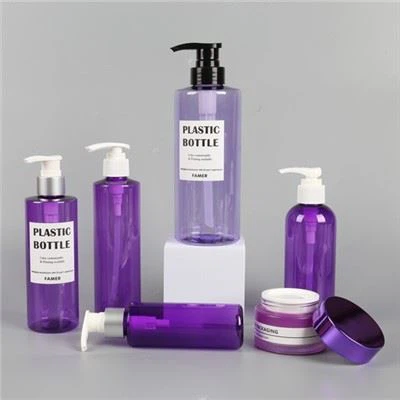

The following are the common forms of printed logo labels in spray bottle cleaner, each of which has its own uniqueness and applicability, requires specific machinery to achieve labeling, and the production process and material selection of labels are becoming more and more diverse, such as Printing of empty spray bottles, bronzing, aluminized labels, laser labels, partial UV convex effect, pearl effect, matte finish, etc.
1. Wet Adhesive Labels-Best spray bottles for cleaning
The wet glue label is mainly applied to the single-sheet labeling system. The process is shown in Figure 2. The wet glue is mostly water-based glue, and its substrate can be paper or aluminized paper. At present, some BOPP (white or transparent) is also It is suitable for this process and is generally a relatively inexpensive labeling method. This labeling method is mainly used in glass beverage bottles and plastic bottles for household cleaning and care.
2. Wrap the label
Wrap labels can be divided into pre-cut wrap labels and roll wrap labels.
Pre-cut winding label - hot melt adhesive label: using the hot melt adhesive supply system, Figure 3 is its process flow chart.
3. Roll-to-circle label: It is a process of conveying the roll film online, tension control, label cutting, gluing, and finally labeling the bottle body around the body. The process flow is shown in Figure 4. The main applications are PET bottles in soft drinks, and also in cola, mineral water, fruit drinks, and milk packaging. Among them, 95% of the film is BOPP material, and a small amount of OPS, PE, PET, and other materials are used.

4. TD Shrink Sleeve
The process of TD shrink label is to make the printed roll film into a sleeve label, put it behind the bottle body, pass through the heat shrink channel, and finally, attach it to the bottle body after shrinking. The process flow can be clearly understood in Figure 5 below.
Commonly used film materials for TD shrink sleeve labels include PVC, OPS, PETG, and a small amount of BOPP. The maximum shrinkage rate of PVC can reach 60%, and it has good shrinkage performance and printability, but the harm to the environment has become an important factor restricting the development of PVC. The maximum shrinkage rate of OPS can reach 65%, with good transparency and a high shrinkage rate, but its disadvantage is that it is not resistant to grease erosion. PETG has a maximum shrinkage rate of 78%, good transparency, and good printability. OPP shrink sleeves are suitable for cylindrical bottle sleeves.
5. MD shrink label
MD shrink label is a new process developed on the basis of wrapping labels. It not only has the characteristics of the fast online speed of wrapping labels but also can shrink in the MD direction. It is suitable for some special-shaped bottles or products that need to be tightly fitted to the bottle body. At present, the MD shrinkage material is ROSO of BOPP, which is different from the traditional shrinkage in the TD direction. MD shrinkage can realize online gluing, label wrapping, shrinkage, and labeling of the bottle body, which greatly improves the production efficiency, and the maximum packaging speed can reach 72,000 bottles/hour.
6. Stretch sleeve
Stretch sleeve label film, the material is LDPE, thickness is 40-45µ usually, the printed roll film is heat-sealed into a tube shape and then reeled. It can be smoothly put on the bottle body. Due to the high elasticity and recovery ability of the film itself, it can be more fitted to the bottle body without any glue and without any heat shrinking channel. Compared with traditional shrink sleeves, it can fully decorate containers of various shapes, and the stretch sleeves are smaller and useless material. Mainly used in soft drink PET bottles. Due to the difference in density, it can be separated from PET in water, making it one of the ideal materials in the PET recycling process.