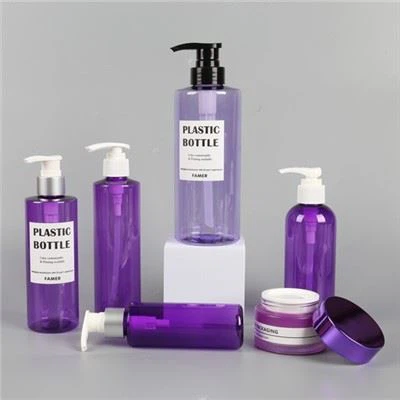

Introduction of dyeing process of anodized film of aluminum cosmetic packaging-2
The requirements of the dyeing of aluminium cosmetic containers for the oxide film
(1) The anodic oxide film obtained from aluminum in sulfuric acid solution is colorless and porous, so it is most suitable for dyeing.
(2) The oxide film must have a certain thickness, light-colored products must be greater than 3 μm, and dark-colored products must be greater than 8 μm.
(3) The oxide film should have certain porosity and adsorption, so the hard oxide film is not suitable for dyeing.
(4) The oxide film should be complete and uniform, and there should be no defects such as scratches, sand holes, and pitting corrosion.
(5) The film layer itself has a suitable color, and there is no difference in metallographic structure. When the content of silicon, magnesium, manganese, iron, copper, chromium, etc. in the alloy composition is too high, the oxide film tends to be dull, and the color tone changes during dyeing.
Dyeing Mechanism of Dyes
(1) The adsorption methods of organic dyes are divided into physical adsorption and chemical adsorption. The electrostatic adsorption of molecules or ions is called physical adsorption; chemical adsorption is called chemical adsorption. Inorganic dyes have a limited range of colors, and the color is not bright enough, but they are resistant to temperature and light, so they have some unique uses.
(2) There are many organic dyes, which can be used for the dyeing of anodic oxide films and must meet the following conditions:
a. Considering the cost and convenience of use, dyeing is generally carried out in an aqueous solution of organic dyes in production. Therefore, water-insoluble dyes cannot be used.
b. Considering the color, light fastness, and bonding fastness after dyeing, dyes that are easy to change color under light should not be used.
c. Because the pore walls of the oxide film are electropositive, negatively charged anionic dyes are preferred.
The color combination and deployment
(1) Among the 7 colors, three are the most basic and cannot be adjusted with any other color. They are red, yellow, and blue, which are called the three primary colors. They can be mixed with each other to produce other colors, so the three primary colors are called the first colors.
(2) The color produced by mixing any two of the three primary colors in equal amounts is a secondary color. Namely orange, green, and purple, are called secondary colors. Such as orange = red + yellow, green = yellow + blue, purple = red + blue.
(3) The color produced by the combination of primary color and secondary color or two secondary colors is called complex color. The complex color is the third color, such as yellow gray = orange + green, red gray = orange + yellow, blue-gray = purple + green.
(4) Complementary colors are also called complementary colors. One of the three primary colors is a secondary color mixed with the other two primary colors, that is, complementary colors. For example, red (primary color) and green (secondary color) are complementary, that is, red and green are complementary colors. Complementary two colors are mutually exclusive, so pay attention when color matching.
(5) The same type of dye must be used when dyeing and color matching. Good dyeing quality can only be guaranteed when dyes with similar properties such as dyeing affinity, diffusivity, fastness, and lightfastness are matched.
(6) When dyeing with mixed dyes, due to the difference in the adsorption speed of the dye coating layer, the composition of the dye solution is easy to change, so quantitative compensation should be carried out according to the actual color change law.
(7) The number of mixed dyes for color matching should be as few as possible, generally two and three at most, so as to avoid complicated changes in the process and inconvenience for mass production.
dyeing equipment
(1) Dyeing tank: Most dyeing tanks use water-soluble organic dyes. Because part of the metallic ash will react with the dyes, PP materials are generally used in the dyeing tanks.
(2) Heater: It is necessary to choose acid-resistant material that cannot react with the dyeing solution, usually a PVC-covered heating tube is used.
(3) Mixer circulation: In order to keep the temperature and concentration in the dyeing tank uniform, the dyeing tank is stirred. In order to remove the granular dirt, it is sometimes necessary to filter with a filter device.
(4) Exhaust: Sometimes the solution in the dyeing tank needs to be heated, and an exhaust device needs to be installed.
Handling precautions during the dyeing
(1) If it is impregnated with nitric acid or sulfuric acid without sealing, discoloration will occur. This fading method has little effect on the oxide film and can be dyed after washing.
(2) It will be difficult to dye if placed in a water tank for a long time after anodization. It can be activated with nitric acid solution and then re-dyed. The undyed product should be stored in a weakly acidic pure water tank.
(3) After the workpiece is anodized, it must be thoroughly cleaned with running water. Especially at the slits and blind holes of the workpiece, avoid the residual acid and alkali slowly emerging from the surface, resulting in blooming and acid-spitting.
(4) Most of the dyes will change the base color after sealing and drying. In actual production, the amount of change should be grasped to determine the color and depth of dyeing.
(5) When dyeing a large area of the product, it needs to be fully stirred to prevent uneven dyeing.