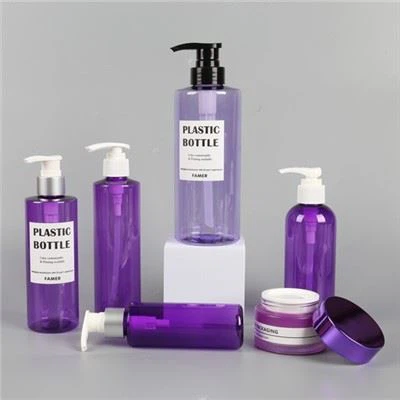

Cosmetic glass bottle manufacturers-Quality control of cosmetic glass bottles
Frosted glass cosmetic bottle wholesale, the quality control of cosmetic glass bottles is divided into two parts, one is the quality control of raw materials, and the other is the quality control of products.
1. Raw material quality control
Most of the glass produced on the market is a multi-component cooling melt with soda-lime silicon as the main body. The main raw materials used include: quartz sand, feldspar, calcite, soda ash, etc.; auxiliary raw materials include: Yuanming powder, carbon powder, Selenium powder, oxygen cobalt, etc. Many of these raw materials are natural minerals and rocks. The quality of raw materials determines the quality of glass products. The purity and particle size of raw materials will affect the production process and product quality of glass.
In order to ensure the quality of incoming raw materials, corresponding instructions have been formulated to guide the inspection of raw materials, which must be strictly followed.
2. Product quality control
In order to ensure that the quality of the glass bottles produced can meet the requirements of customers, the monitoring items include: glass composition, glass density, glass bubbles, glass color, and glass bottle post-processing products.
Controlling the chemical composition of glass within the set requirements of glass formula composition is the basic requirement to ensure the quality of glass bottles. The analysis of glass composition will be carried out twice a week, using an atomic absorption spectrometer to measure: Al₂O₃, Fe₂O₃, CaO, MgO, Na₂O, K₂O, Li₂O, and SiO₂.
The change in glass density directly reflects whether the chemical composition of glass is stable or not. The automatic glass density tester of SAINT-GOBAIN OBERLAND is used to monitor the change of glass density every day to ensure the stability of glass composition.
3. Glass bottle post-processing products
(1) Adhesion test of glass bottle varnishing, silk screen printing, and bronzing products
In order to monitor the adhesion of varnished, silk-screened, and hot-stamped products on glass bottles, a 100-grid test can be performed.
(2) Immersion test of glass bottle varnished products
To monitor the adhesion of glass-coated products after immersion, an immersion test can be performed.
(3) Yellowing resistance test of glass bottle spray products
In order to monitor the degree of anti-aging and yellowing of glass bottle spraying, a lightfastness test can be carried out.