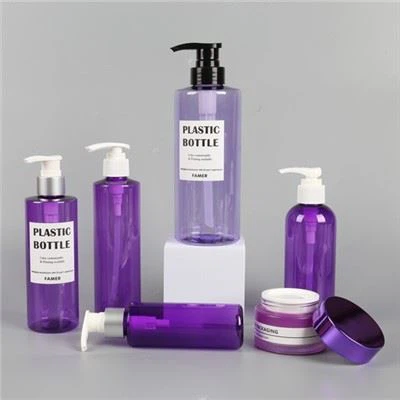

Common materials of vacuum evaporation for packaging for cosmetic
1. Definition and characteristics of vacuum evaporation
Physical vapor deposition (Physical Vapor Deposition, PVD), also known as vacuum coating or vacuum metallization (Vacuum Metalization, VM), is to use PVD method under vacuum conditions to change metal materials from solid to gaseous substances, and then condense and deposit on On the surface of the substrate, a film layer with metallization effect is formed.
This process can form a bright metal layer on the plastic surface of cosmetic bottles, and the latter is suitable for paint spraying, with convenient color matching and a good decorative effect. It is widely valued by the plastic decoration industry and is an important plastic metallization method.
In addition, the vacuum coating on the surface of eco friendly cosmetic packaging can be divided into the functional coating and decorative coating.
The functional coating can improve the physical and chemical properties of the plastic surface, such as electrical conductivity, barrier properties, etc.; decorative coating can make the surface of plastic products have a metallic luster, and can show different colors and effects according to actual needs.
Compared with the traditional electroplating method, vacuum coating technology has great advantages in terms of cost and environmental protection. Therefore, it is widely used and plays an important role in cosmetic tube decoration.
2. The development history of vacuum coating technology
The application of vacuum coating technology is very early. At the beginning of the 20th century, Edison proposed the process method of surface metallization of disc wax film by cathode sputtering, and applied for a patent in 1903; during World War II, Germany used this technology to prepare various military optical lenses and reflectors; 1930 oil Evaporative coating machines with wide practical value made of diffusion pumps came out; in the 1940s, coating technology had been applied to metal and paper as an important means of metallization; in the 1950s, vacuum coating technology began to be applied to electrical equipment; The development of plastic decorative coating and the continuous advancement of plastics to replace metal products, vacuum coating technology is more and more used in plastic metallization. In the 1970s, it was gradually applied to automotive exterior parts, cosmetic packaging materials, toys, and daily commodities. increase.
Generally, metallization methods on plastic packaging materials include vacuum evaporation and vacuum sputtering.
In the field of cosmetic packaging materials, vacuum evaporation plating developed earlier, and it is the most widely used in plastic cosmetic bottles. The application range of vacuum sputtering plating is not large, but since sputtering plating does not need to supplement coating materials, it can easily achieve a long-term continuous run.
3. Introduction of common coating materials
The vacuum coating material refers to the material that is deposited on the substrate by vacuum coating to form a coating layer.
Different coating materials have different properties and colors of deposited films. At present, the metal materials used in the vacuum evaporation coating process are generally metals with lower melting points: indium (156.61°C), tin (232°C), magnesium (651°C), zinc (419.53°C), aluminum (660°C), Copper (1083.4°C), silver (961.78°C), gold (1063°C), and the chemical stability of the coating needs to be considered at the same time, for example tin will self-destruct at low temperature, magnesium and zinc are chemically active and easy to chemically interact with non-metals Reaction and deterioration, are not suitable as coating materials.
Therefore, in the field of cosmetic packaging materials, aluminum has become the most important coating material because of its low melting point, stable chemical properties, reasonable cost, strong adhesion to plastic coatings, and good metallic luster.
4. Substrate Fit Impact
There are many types of plastic substrates suitable for direct vacuum coating. For example, PET film can be vacuum coated directly on the film. ABS material can also be used as a direct coating material because of its good adhesion and heat resistance.
5. As a plastic substrate for vacuum coating, several indicators must be considered:
(1) Adhesion
The material to be plated should have good adhesion and bonding strength with the vacuum coating material, which is related to the polarity of the plastic itself.
It is generally believed that polyester materials have the strongest bonding force with aluminum plating, while weaker polar materials such as PP and PE have poor adhesion. When coating directly on the substrate, the cleanliness of the plastic surface must be carefully considered. The presence of oil stains, mold release agents, etc. may cause pinholes in light, and uneven coating or even peeling in heavy. At the same time, because plastics are prone to static electricity and have strong water absorption, especially after mixing some inorganic powders, the presence of moisture will also reduce the surface activity of the plastics and affect the combination of the coating and the plastic surface.
(2) Flatness of plastic surface
In order to achieve a bright metal film layer and produce a good decorative effect, there are very strict requirements for the surface flatness of the substrate.
Generally speaking, the thickness of the aluminum layer of vacuum coating is below 100~200nm, which means that if the surface roughness of the substrate is greater than 200nm, the coating layer cannot cover the defects, and the high gloss and high brightness of the metal layer will cause this problem. Amplify the difference. For general injection molding products, because the flatness of the mold cavity is mostly above 500nm, it is difficult to achieve the flatness required for aluminum plating.
Under the trend of more and more pursuit of exquisite appearance, the direct coating of injection molded parts is very difficult. The biaxially stretched PET film can achieve the required flatness and can be directly coated.
In the general injection molding process, the spray primer is more used to adjust the surface flatness of the product to suit the requirements of the coating, while the direct coating process is rarely used.
Tomorrow we will continue to explain the main application areas of vacuum evaporation-cosmetic packaging wholesale