

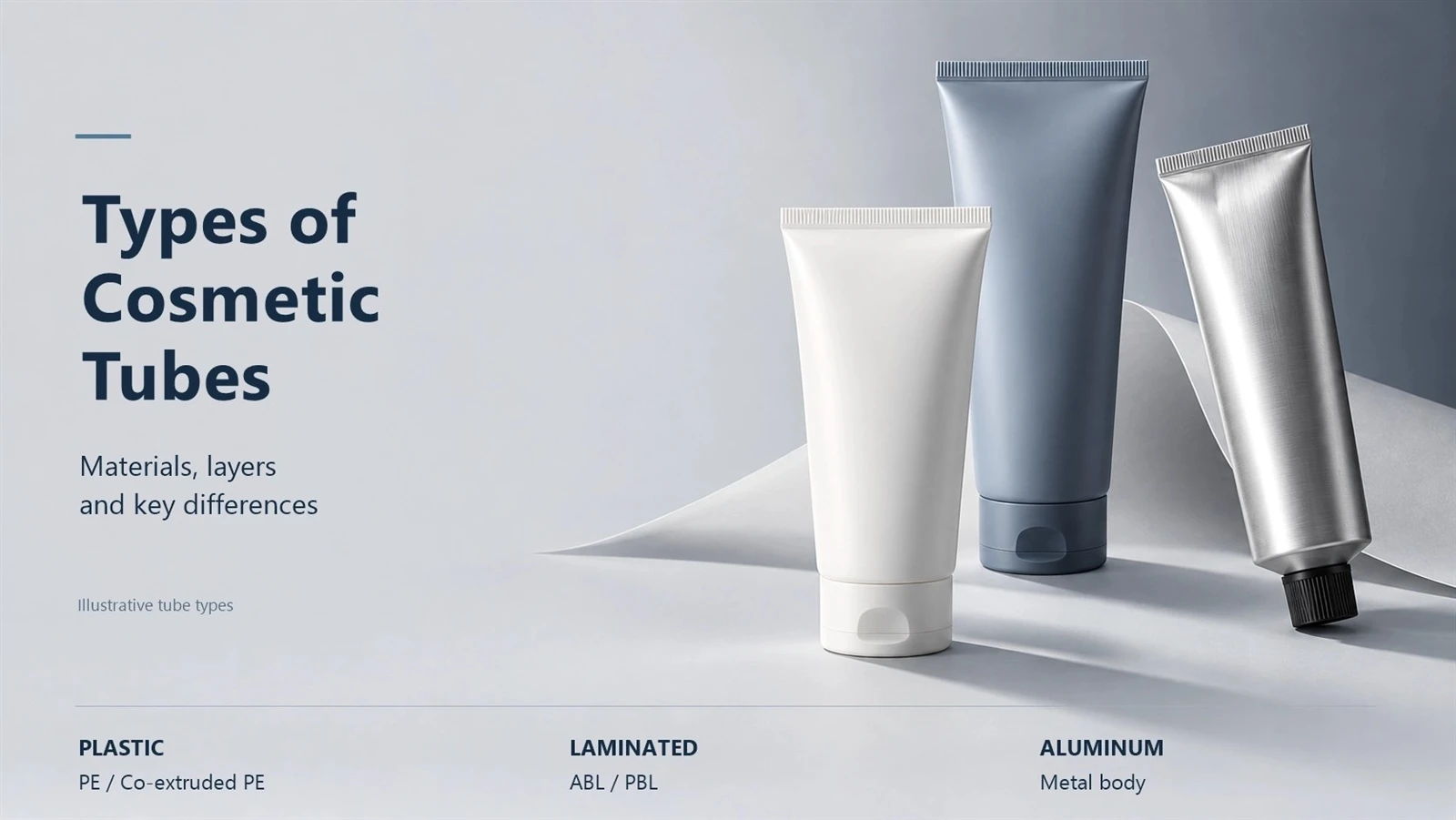
Cosmetic tubes fall into three main families: plastic tubes, laminated tubes and collapsible aluminum tubes. Common purchasing descriptions include PE, co-extruded PE, aluminum barrier laminate (ABL) and plastic barrier laminate (PBL).¹²
The differences begin with how the tube body is built. A PE tube can contain several co-extruded layers, an ABL tube contains aluminum foil within a laminate, and an aluminum tube has a metal body. These distinctions help buyers identify which specifications and performance data to compare.
Main cosmetic tube types compared
|
Tube family |
Common option |
Main structural difference |
What deserves attention |
|
Plastic |
Extruded PE tube |
A polyethylene sleeve, available in single-layer or multilayer configurations |
The actual layer composition |
|
Plastic |
Co-extruded barrier tube |
Functional layers formed together, potentially including EVOH |
Barrier material and layer thickness |
|
Laminate |
ABL tube |
Aluminum foil bonded within a multilayer wall |
Foil specification, inner layer and longitudinal seam |
|
Laminate |
PBL tube |
Plastic laminate with a polymer barrier, commonly EVOH |
Barrier configuration and complete material composition |
|
Metal |
Collapsible aluminum tube |
An aluminum body rather than a laminate sleeve |
Internal surface or coating and filling requirements |
The table separates the main families from common constructions within them. ETMA recognizes plastic, laminate and aluminum tubes, while COTREP illustrates ABL and PBL structures using aluminum and EVOH barriers respectively.¹²
Other constructions exist. Plastic tubes can also use PP, and some laminates use alternative barrier materials. The options above provide a practical starting point for comparing common cosmetic tube specifications.
When exploring cosmetic tube options, identify the body construction before finalizing the applicator, cap and decoration.
Materials, layers and applicators describe different features
A roller-ball tube and an ABL tube describe different aspects of packaging. "Roller ball" identifies the applicator; "ABL" identifies the wall construction. A tube can combine both descriptions.
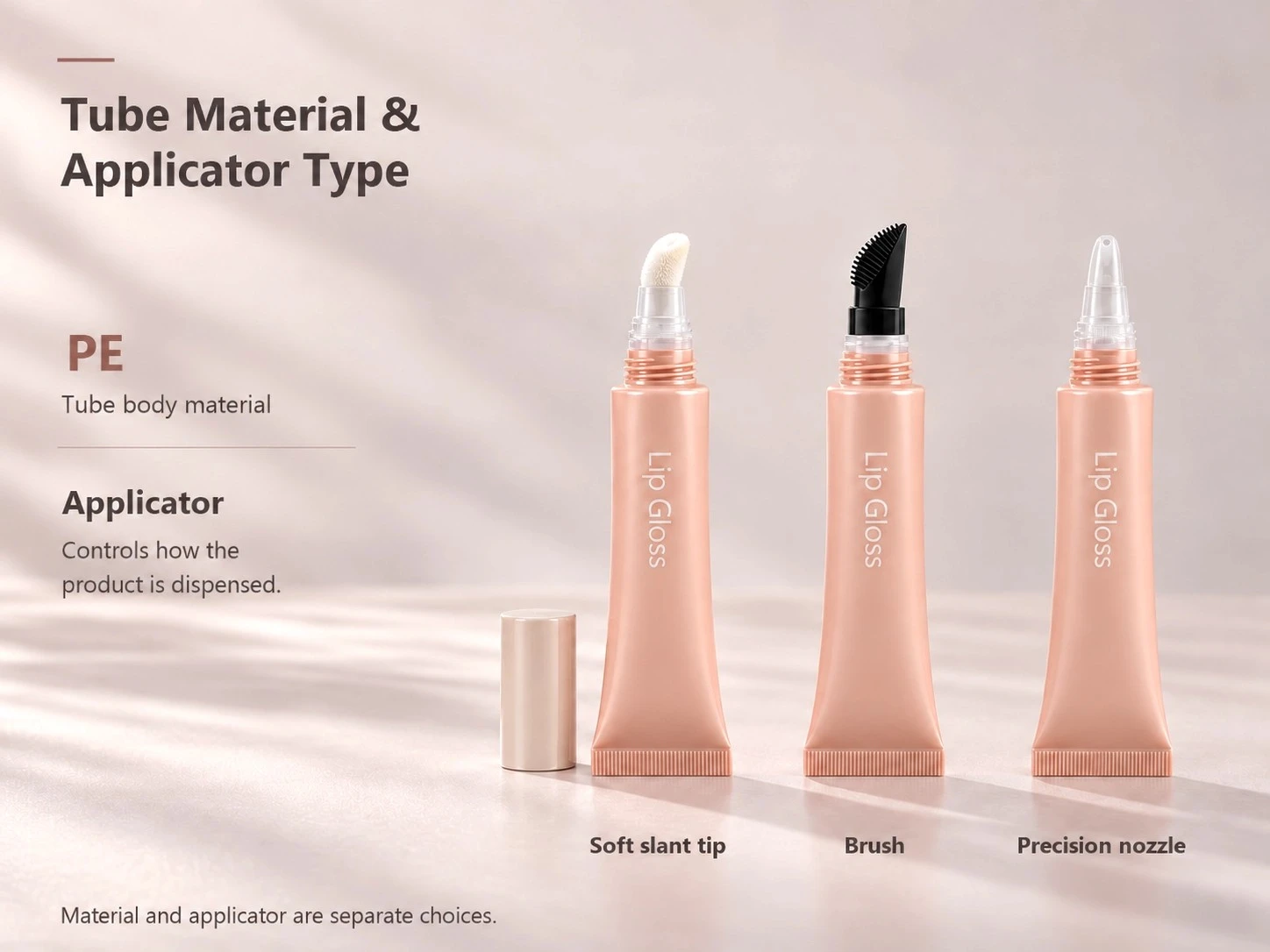
FAMER's mini lip care squeeze tubes provide a concrete example. The product listing specifies a PE tube body, PP cap and capacities of 5 to 15ml, with options including soft applicators, brush tips and precision nozzles. The applicator choice adds information about how the product is used, while the body material remains separately specified.⁵
Layer count and raw-material origin are separate details too. "Five-layer" describes the wall configuration. PCR identifies post-consumer recycled material, while sugarcane-based PE identifies the origin of the polyethylene.
For a custom project, these choices need to be brought together in one specification. A request for a "PE lip tube," for example, still leaves the wall structure and applicator configuration open.
Single-layer, two-layer and five-layer tube walls
What layer count tells a buyer
Layer count identifies how the wall is divided, but it does not describe every material or function within it.
For a single-layer PE proposal, the resin specification is a starting point. For a two-layer proposal, the outside-to-inside material sequence becomes important: the name alone does not establish that either layer is a dedicated barrier.
Total wall thickness and barrier-layer thickness are also separate specification items. A thicker tube should therefore not automatically be treated as having better barrier performance.
A five-layer PE tube explained
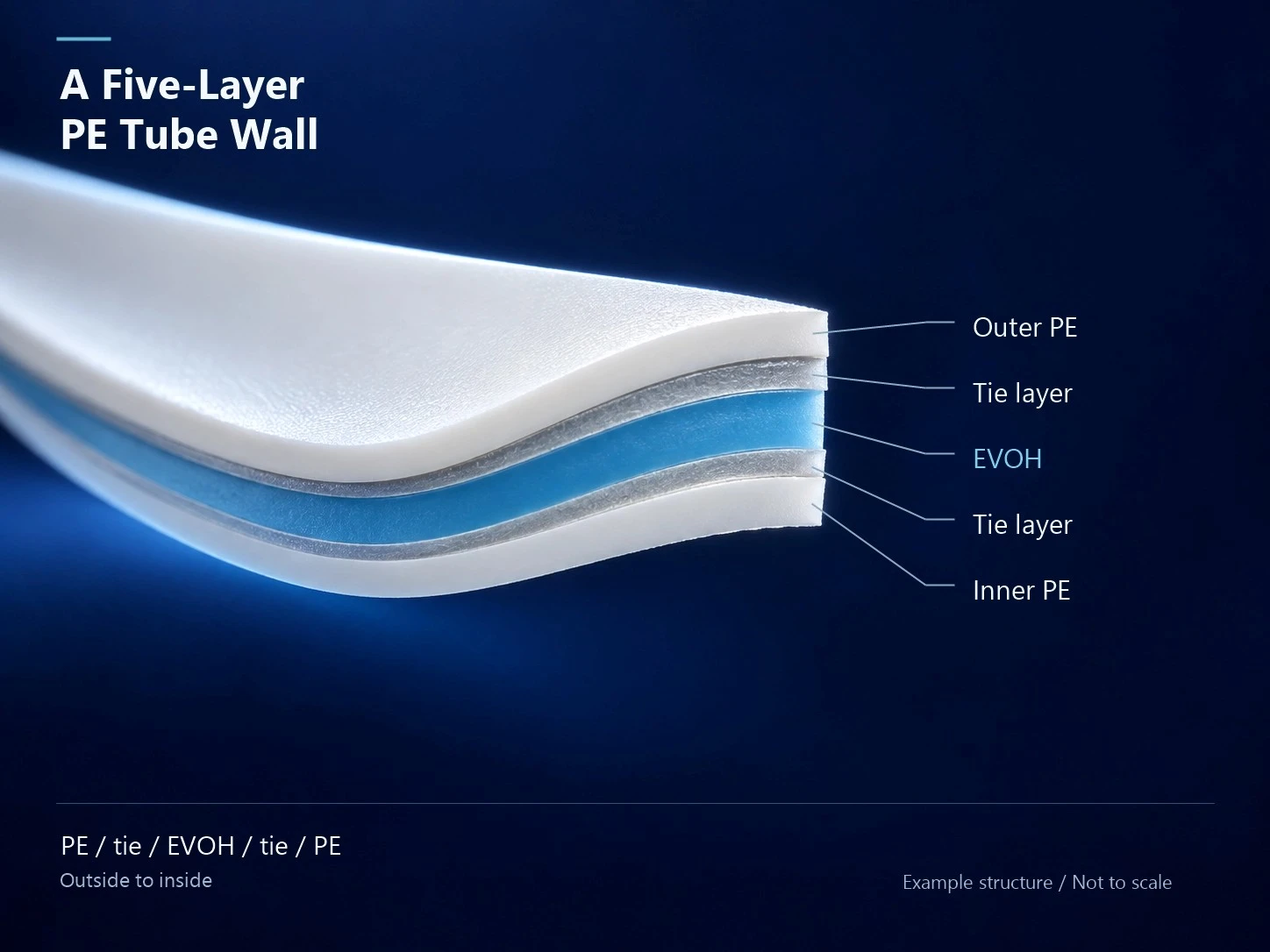
An illustrative five-layer PE/EVOH barrier structure is:
Outer PE → tie layer → EVOH → tie layer → inner PE
In this example, EVOH provides the oxygen-barrier layer, while the tie layers bond it to PE. Published research documents this arrangement in packaging film; it illustrates the layer sequence, rather than proving the performance of a finished cosmetic tube.³
|
Layer |
Function in this example |
|
Outer PE |
Exterior surface for printing and appearance |
|
First tie layer |
Bonds the outer PE to the barrier |
|
EVOH |
Provides the gas barrier |
|
Second tie layer |
Bonds the barrier to the inner PE |
|
Inner PE |
Forms the product-contact surface |
Two of these five layers provide adhesion. The structure contains one dedicated EVOH barrier layer, not five barrier layers.
This example also explains why two quotations labeled "five-layer PE" may require further comparison. They can use different resin grades, layer thicknesses or total wall thicknesses.
How layer customization works in a FAMER product
FAMER specifies tube-wall layers according to the customer's material requirements. The selected configuration is confirmed for the individual project.
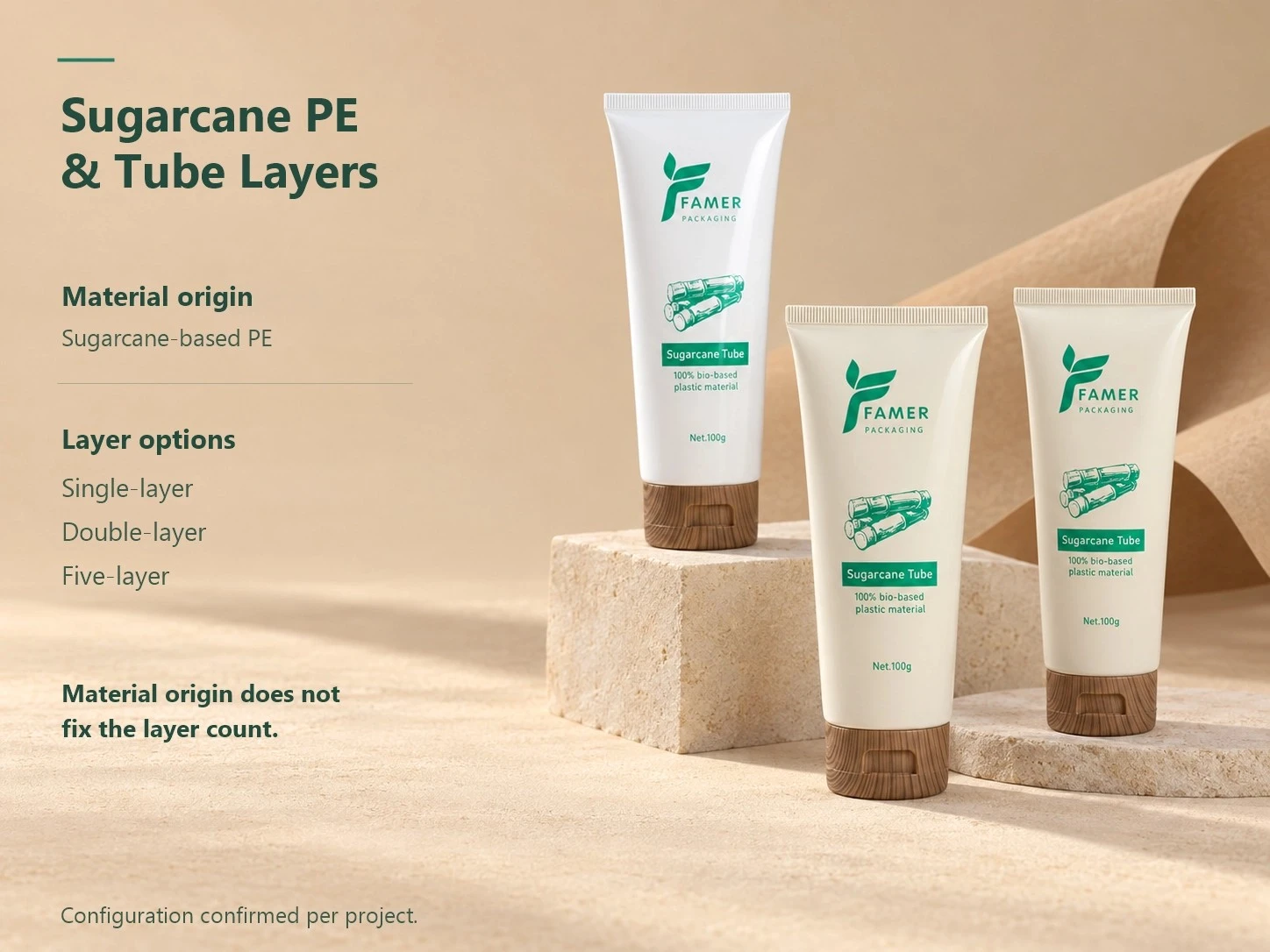
For example, FAMER's 50ml sugarcane-based Green PE tube lists single-layer, double-layer and five-layer options, together with round or oval shapes and several cap choices.⁶
Here, choosing sugarcane-based PE establishes the material direction. The layer structure remains a separate decision. A buyer considering this format should define the required product protection before selecting the wall configuration.
The listing demonstrates customization options; the final layer sequence and performance requirements belong in the agreed project specification.
How ABL and PBL walls differ
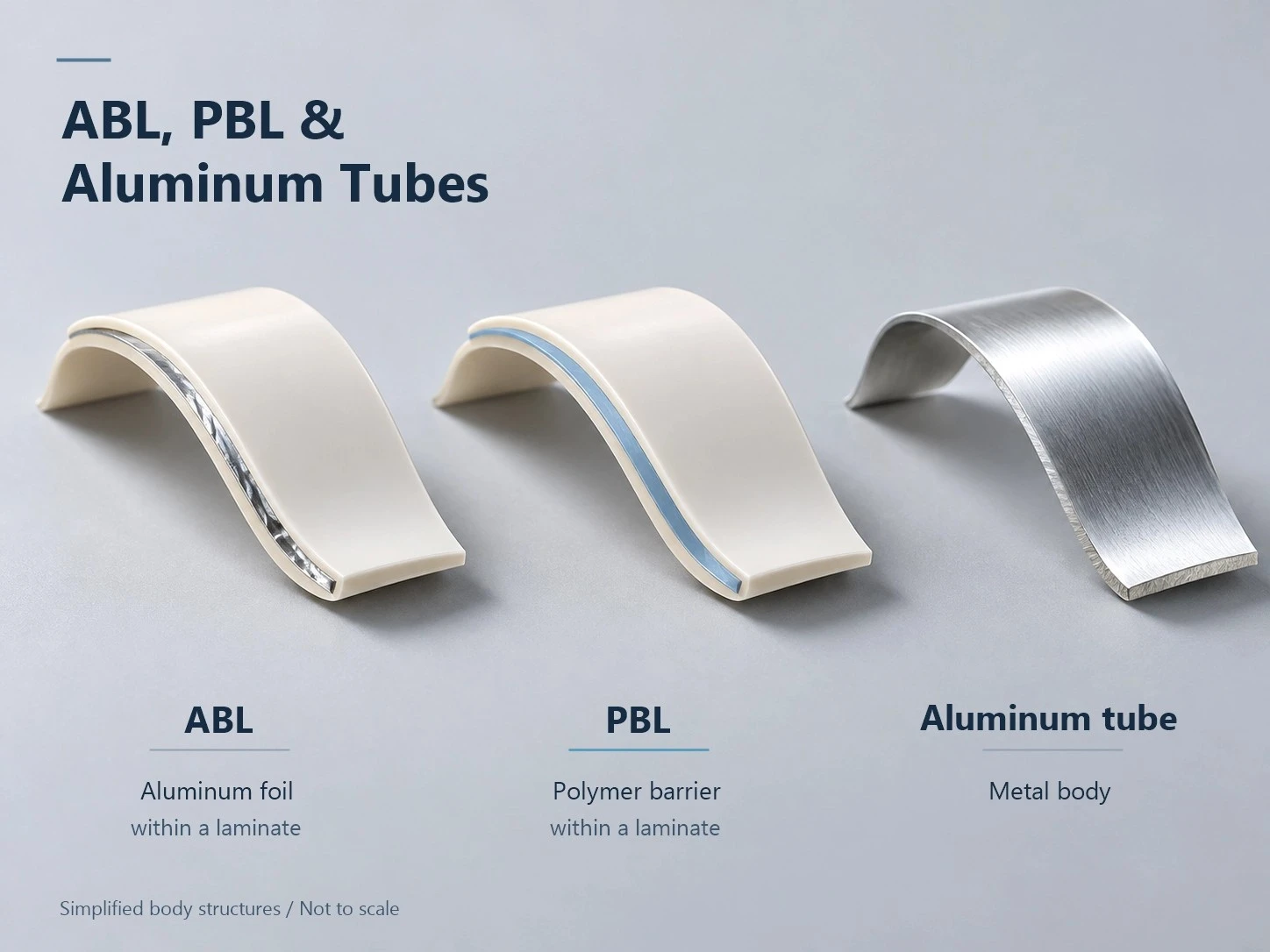
COTREP distinguishes extruded or co-extruded tube walls from laminated ABL and PBL constructions. ETMA describes making a laminate sleeve by welding the two longitudinal edges of a laminate web.¹²
In ABL, aluminum foil provides the barrier within the laminate. In a common PBL construction, EVOH performs that role within a plastic laminate. COTREP depicts these broadly as PE/aluminum/PE and PE/EVOH/PE structures.²
These simplified descriptions identify the main materials. A purchasing specification should show the full sequence, including bonding layers and the formula-contact material.
An EVOH-containing co-extruded tube and an EVOH-containing PBL tube can share a barrier material while having different body constructions.
Where aluminum tubes fit
A collapsible aluminum tube has a metal body formed by impact extrusion. It differs from ABL, where aluminum foil is one layer within a laminate.¹
For aluminum tubes, the internal surface needs particular attention. Where a protective coating is used, its specification belongs in the compatibility review because it is the surface in contact with the formula.
If both formats are on your shortlist, our aluminum tubes vs ABL tubes guide compares product-contact surfaces, squeeze behavior and filling requirements.
Which differences matter when selecting a tube?
Start with the required protection
Identify whether the formula needs particular protection from oxygen, moisture or light. These are separate requirements, and the proposed construction should address the relevant ones.
When oxygen protection is a priority, for example, the shortlist might include an EVOH-containing co-extruded tube and a suitable laminate. Compare their supporting data alongside the required appearance and dispensing behavior.
A "high-barrier" label is too broad to settle that comparison. For OTR or WVTR reports, check the sample structure, thickness, temperature, humidity, method and units. ASTM D3985 measures oxygen transmission through films, sheets and related materials, and states that OTR is not the sole determinant of packaging protection. Establish whether a supplied result covers a material sample, a tube body or the complete package.⁴
Evaluate the complete configuration
The formula encounters the shoulder and dispensing components as well as the tube wall. The filling process must also produce a reliable tail seal.
For laminated tubes, the longitudinal seam needs to be considered in artwork preparation. ETMA describes this seam as the joint between the two edges of the laminate web.¹
An empty sample helps establish dimensions, appearance and feel. A filled sample allows evaluation of product changes, leakage, sealing and dispensing with the actual formula.
This keeps the selection tied to the intended product rather than a general recommendation for every cream, serum or sunscreen.
Preparing a useful tube specification
Before comparing quotations, give each supplier the same project brief:
- Product type, formula characteristics and known sensitivities.
- Fill quantity, preferred dimensions and dispensing format.
- Material requirements and any preferred wall construction.
- Required barrier data, wall thickness and relevant tolerances.
- Decoration, quantity per SKU, destination market and filling conditions.
Where the layer structure is undecided, describe the protection requirement and request candidate configurations.
For instance, "50ml Green PE, flip-top cap" identifies a material direction and format, but leaves the wall structure open. Adding the relevant protection requirements gives the supplier a clearer basis for proposing layer options.
Discuss a custom cosmetic tube project with FAMER
Share your required materials, product type, capacity, preferred dispensing format and quantity with FAMER. Include an existing specification or any known barrier requirements.
The discussion can then focus on a suitable tube configuration and samples for evaluation, with the layer structure confirmed against the project brief.
Frequently Asked Questions
Are PE, ABL, PBL and aluminum the only types of cosmetic tubes?
No. These are common purchasing terms, but they describe different aspects of tube construction. The main families are plastic, laminated and aluminum tubes. Other options include PP plastic tubes and alternative laminate barrier materials.¹²
Is a five-layer PE tube the same as a PBL tube?
No. A five-layer co-extruded PE tube forms its wall layers during extrusion. A PBL tube is made from laminated sheet material with a longitudinal seam. Both may contain EVOH, but that does not make their construction identical.¹²
Are sugarcane PE tubes available only in single-layer construction?
No. Sugarcane PE describes the material's origin, not the number of wall layers. For example, FAMER's 50 ml sugarcane PE tube offers single-layer, double-layer and five-layer options, with the configuration confirmed for each project.⁶
Does PCR describe a separate tube-wall structure?
PCR indicates the use of post-consumer recycled material. It does not specify how the tube wall is constructed. Buyers still need to confirm the layer structure, where recycled material is used and its percentage.
Do oxygen-sensitive formulas always require ABL tubes?
The formula category alone is not enough to decide. EVOH-containing co-extruded tubes or suitable laminated tubes can be considered, then assessed against barrier data, the complete packaging configuration and formula compatibility.
Can I request a quotation or samples before deciding on the wall structure?
Yes. Provide the product application, capacity, material requirements, known protection needs and estimated quantity so the supplier can propose candidate configurations. Confirm the material sequence, wall thickness, closure and dispensing format before final approval.,
References
- European Tube Manufacturers Association (ETMA). Tube Types. Supports the tube families, impact-extruded aluminum bodies and welded laminate sleeves.
- COTREP. Recyclability of Plastic Tubes, July 2025, version 2, p. 4 (French). Used for tube manufacturing routes and the simplified ABL/PBL wall structures.
- Designing an Oxygen Scavenger Multilayer System Including Volatile Organic Compound (VOC) Adsorbents for Potential Use in Food Packaging. Polymers, 2023, 15(19), 3899, section 2.6. Documents a PE/tie/EVOH/tie/PE film structure; it does not establish cosmetic-tube performance.
- ASTM International.ASTM D3985-24: Standard Test Method for Oxygen Gas Transmission Rate Through Plastic Film and Sheeting Using a Coulometric Sensor. Public scope and significance sections support the limits of interpreting material OTR results.
- FAMER. Mini lip care squeeze tubes. Product source for the listed capacity, body and cap materials, and applicator options.
- FAMER. 50ml sugarcane-based Green PE tubes. Product source for the listed material, capacity and layer customization options.