

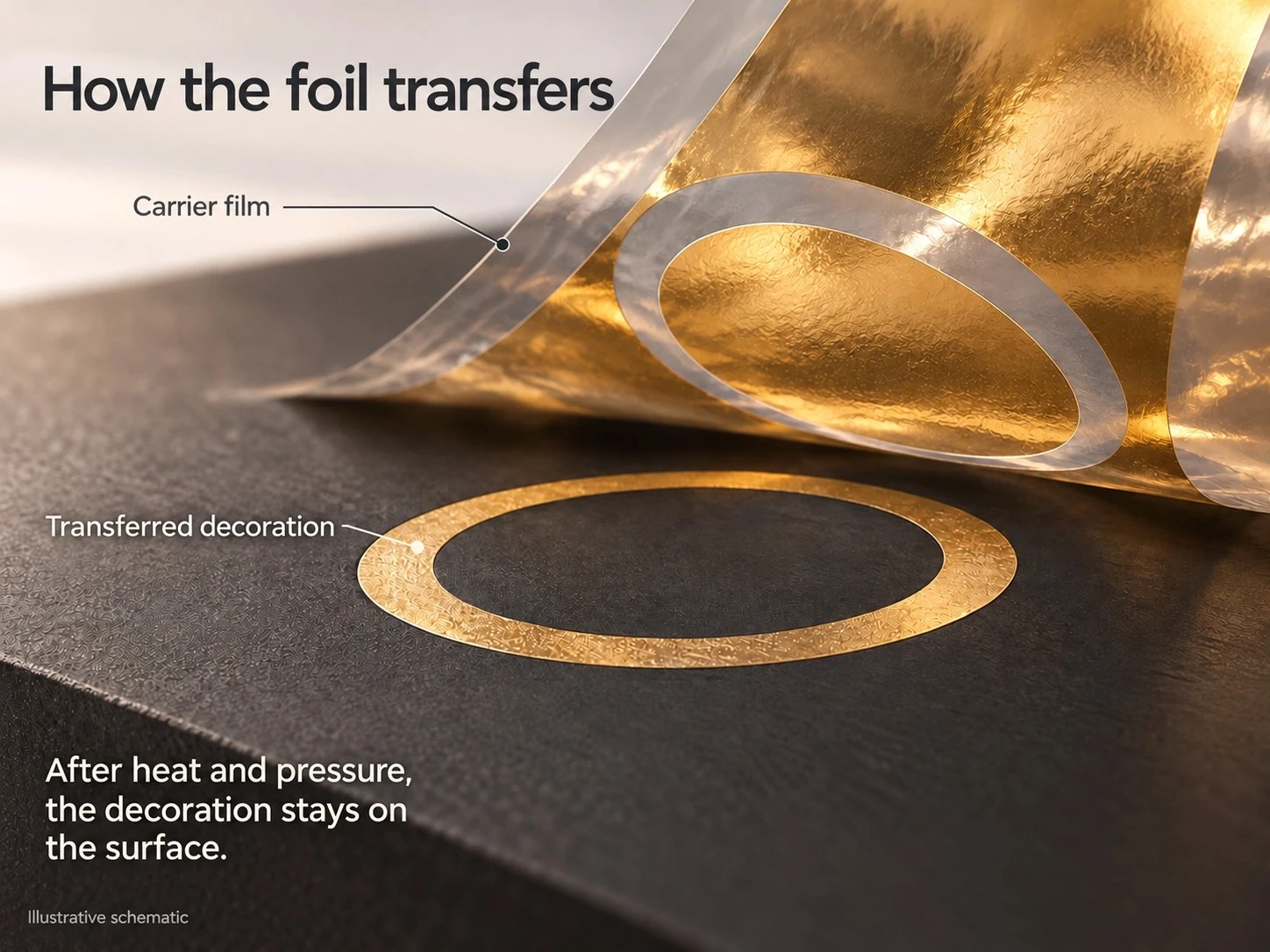
Hot stamping uses heat and pressure to transfer a foil image onto a surface.¹ On cosmetic packaging, it creates metallic or colored lettering, logos and accents. After transfer, the carrier film is removed, leaving the decoration on the package.
The terms hot stamping and hot foil stamping are commonly used for this process.² Although gold is a familiar choice, the name does not restrict the decoration to gold. To understand how a foil logo ends up on a bottle, it helps to start with the foil itself.
How Hot Stamping Works
The layers in a hot-stamping foil
A typical metallic-effect hot-stamping foil has the following layers:
Carrier film: supports the thin layers during handling and transfer.
Release layer: allows the decorative layers to separate from the carrier.
Lacquer or color layer: can carry the color tint of metallic-effect foils.
Metallized layer: contributes the metallic appearance.
Adhesive layer: bonds the transferred decoration to the receiving surface.
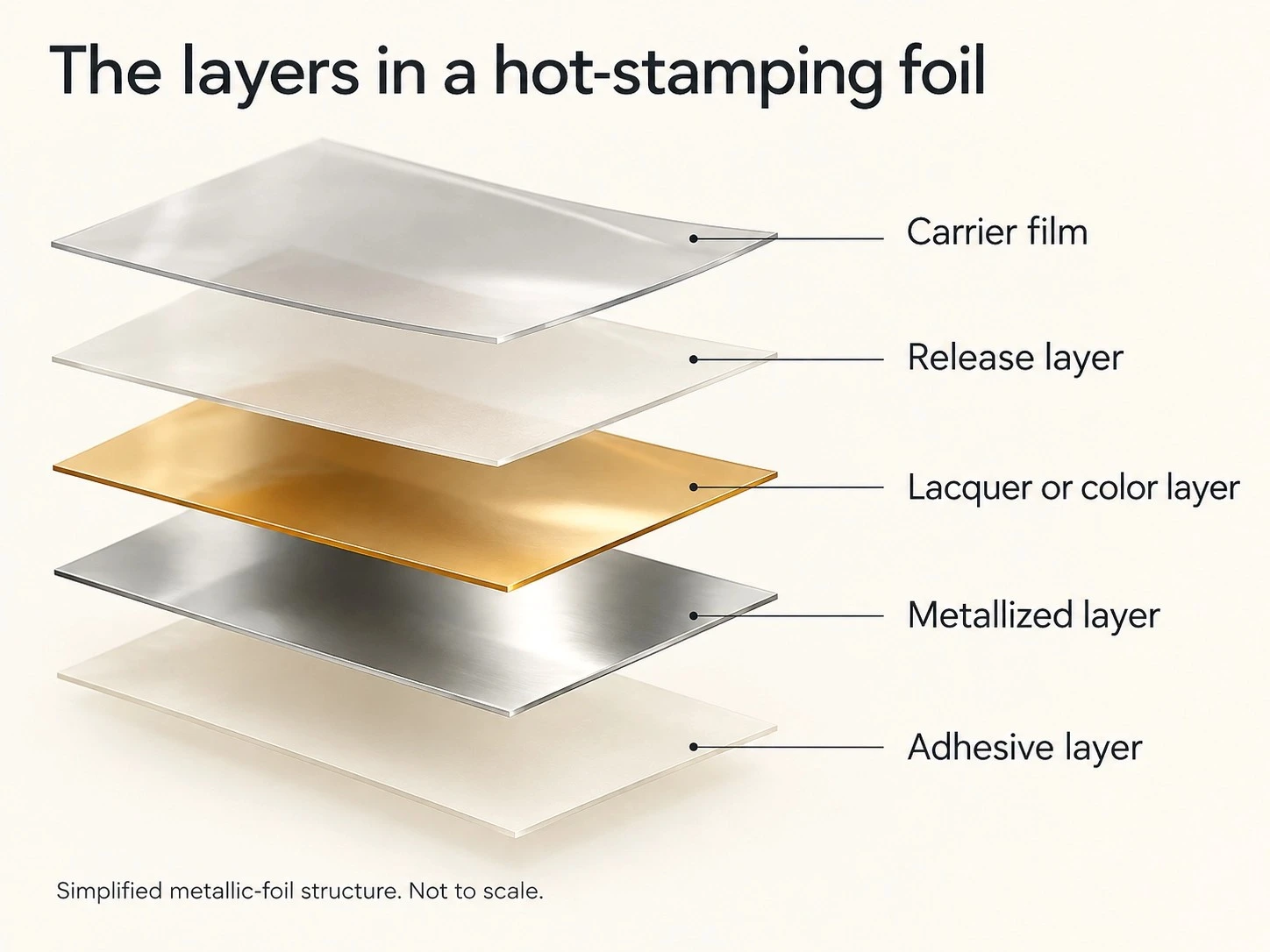
Heat activates the release and adhesive layers; pressure establishes contact with the receiving surface. The decoration bonds to the surface, then the carrier is removed. Other foil types can have different layer structures.
A typical bottle-decoration workflow
In vertical stamping, the die defines the image transferred from the foil. A typical bottle-decoration trial follows these steps:
- Prepare the artwork and tool. Separate the elements intended for foil, such as the logo, from other printed information. Review them at their final size.
- Position and support the bottle. Hold the component so the intended area can meet the stamping tool consistently, using a positioning reference for the decoration.
- Place the foil in the transfer path. The foil sits between the heated tool and the receiving surface, with its adhesive side facing that surface.
- Apply heat and pressure. In vertical stamping, the heated die moves into contact to transfer the decoration. The setup is adjusted for the component and foil.
- Remove the carrier and inspect. Examine the transferred details, edges and position on the bottle before proceeding with the production design.
Vertical stamping and rolling methods
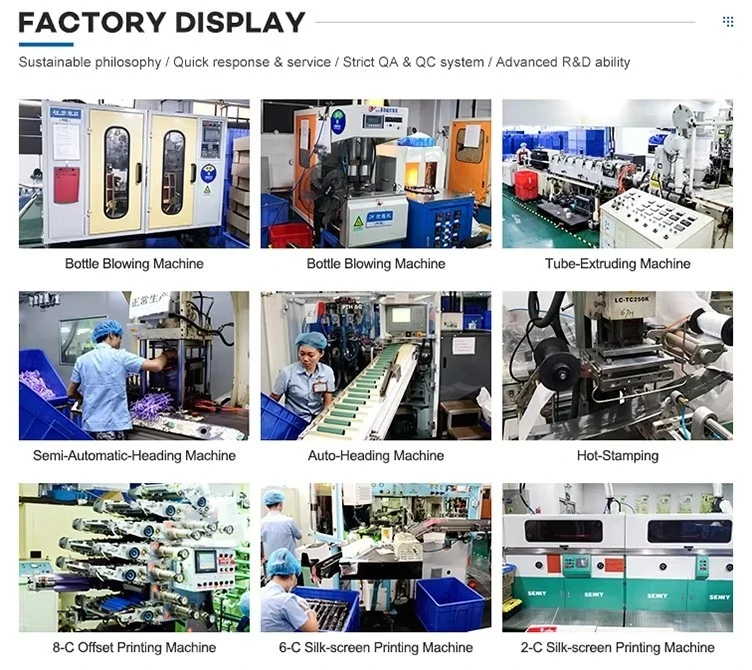
Vertical stamping uses an up-and-down tool movement. Roll-on stamping uses a silicone wheel rolling over the part. In peripheral rolling, a round component rolls across a flat die; this method is used for cylindrical or conical parts. Tool motion and contact therefore need to suit the component geometry.
The Finishes Hot Stamping Can Create
Metallic foils can provide gold, silver and other metal-like appearances. Foils come in matte and glossy finishes.¹ Brushed effects are also available, depending on the foil. Pigmented foils offer colored effects that need not look metallic. The chosen foil still needs to suit the actual packaging surface.
A gold ink specification describes a printed color; a gold foil specification describes a transferred finish. Metallic inks can also have reflective qualities, so "gold" alone does not define the appearance. Compare physical references under the same lighting when deciding which treatment best fits the design.
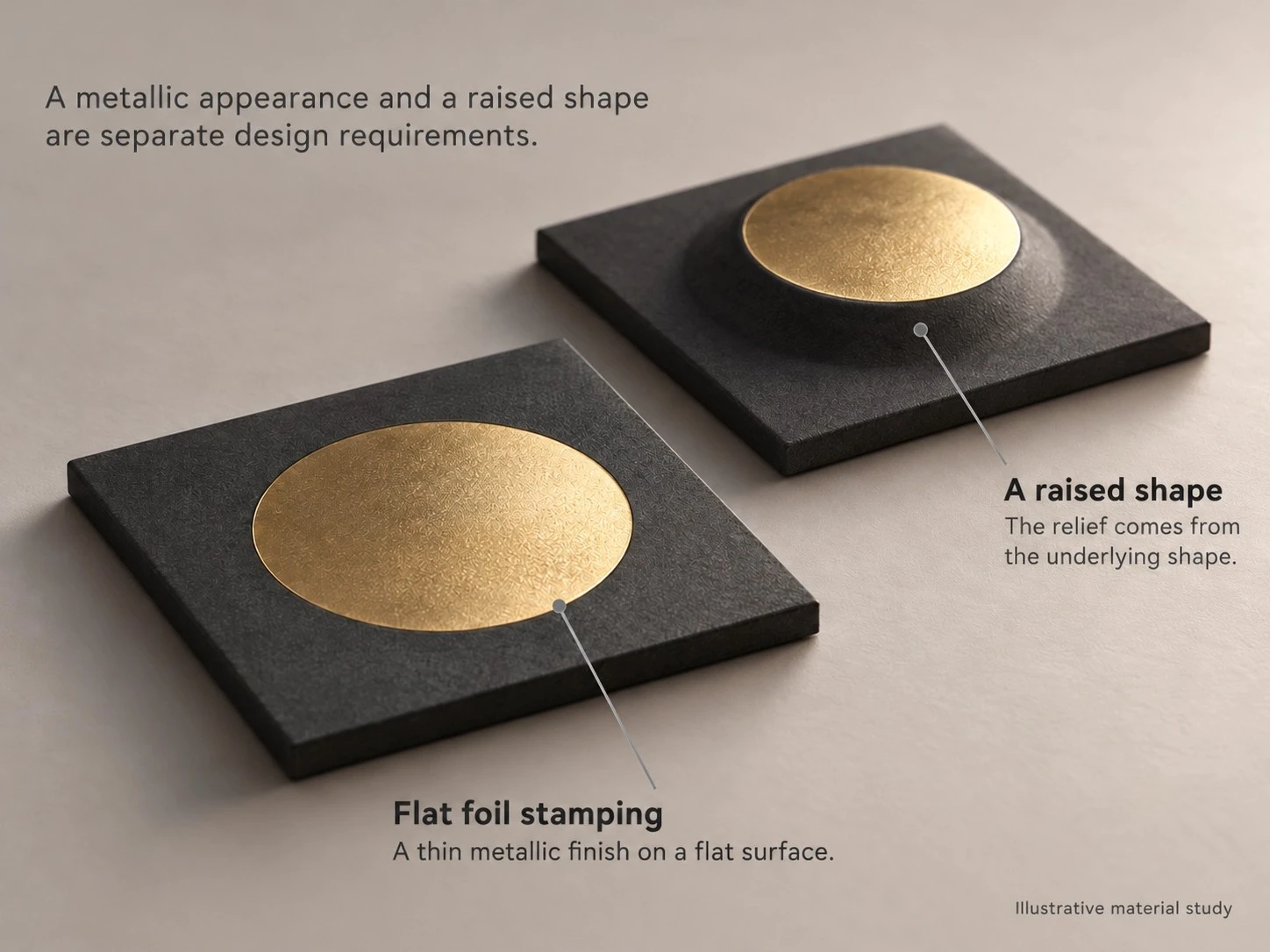
Foil also needs to be distinguished from embossing. Flat foil stamping applies a finish without inherently creating a raised image. A metallic appearance and a raised shape are separate design requirements. If tactile relief matters, the component and forming method need their own assessment.
For a cosmetic bottle, foil can be reserved for the brand name, a small emblem or a border. Keeping the effect within a defined area gives the rest of the layout room for product information. For a range built around PET cosmetic bottles in multiple sizes, check the foil logo's scale and placement on each bottle format.
What Affects the Stamping Result
Surface and foil selection come first. The foil contacts the outermost surface, which may be the bottle material, a coating or an existing printed layer. A trial on an uncoated part therefore does not establish the result over the coating planned for production. Foils can differ in adhesion, scratch resistance and chemical resistance even when their appearance is similar.
Shape affects contact and support. A logo on a straight bottle wall presents a different setup from one near a shoulder or across a changing curve. A placement drawing should identify the decoration area and its relationship to the bottle. A flat artwork preview cannot show how the entire design will sit on a curved component.
Artwork details and process settings work together. Narrow spaces within letters, fine lines and closely packed elements need review at the intended size. Temperature, pressure and dwell time, meaning the duration of contact, are process variables. Their settings need to be established for the foil, surface and equipment; one font-size limit or temperature does not describe every project.
When foil shares a layout with printing, registration means how accurately the two decorations line up. Leave this relationship clear in the artwork rather than relying on a photograph of the intended look. Missing foil or ragged edges on a trial should be recorded for investigation; their appearance alone does not identify the cause.
Applying Hot Stamping to a Cosmetic Bottle Design
FAMER's supplied product reference shows how gold lettering can contrast with dark bottle bodies. The metallic-looking collars are separate components from the decorated bottle bodies. FAMER's 30 ml plastic dropper bottle provides a product starting point for discussing this style.
For a proposed hair-oil layout inspired by the reference, center a gold FAMER wordmark on the front body area below the shoulder. Put white printed "HAIR OIL" text beneath it, with a clear visual gap. This is an illustrative artwork arrangement. It gives the brand name the reflective effect while allowing the supporting text to use a separate print treatment.
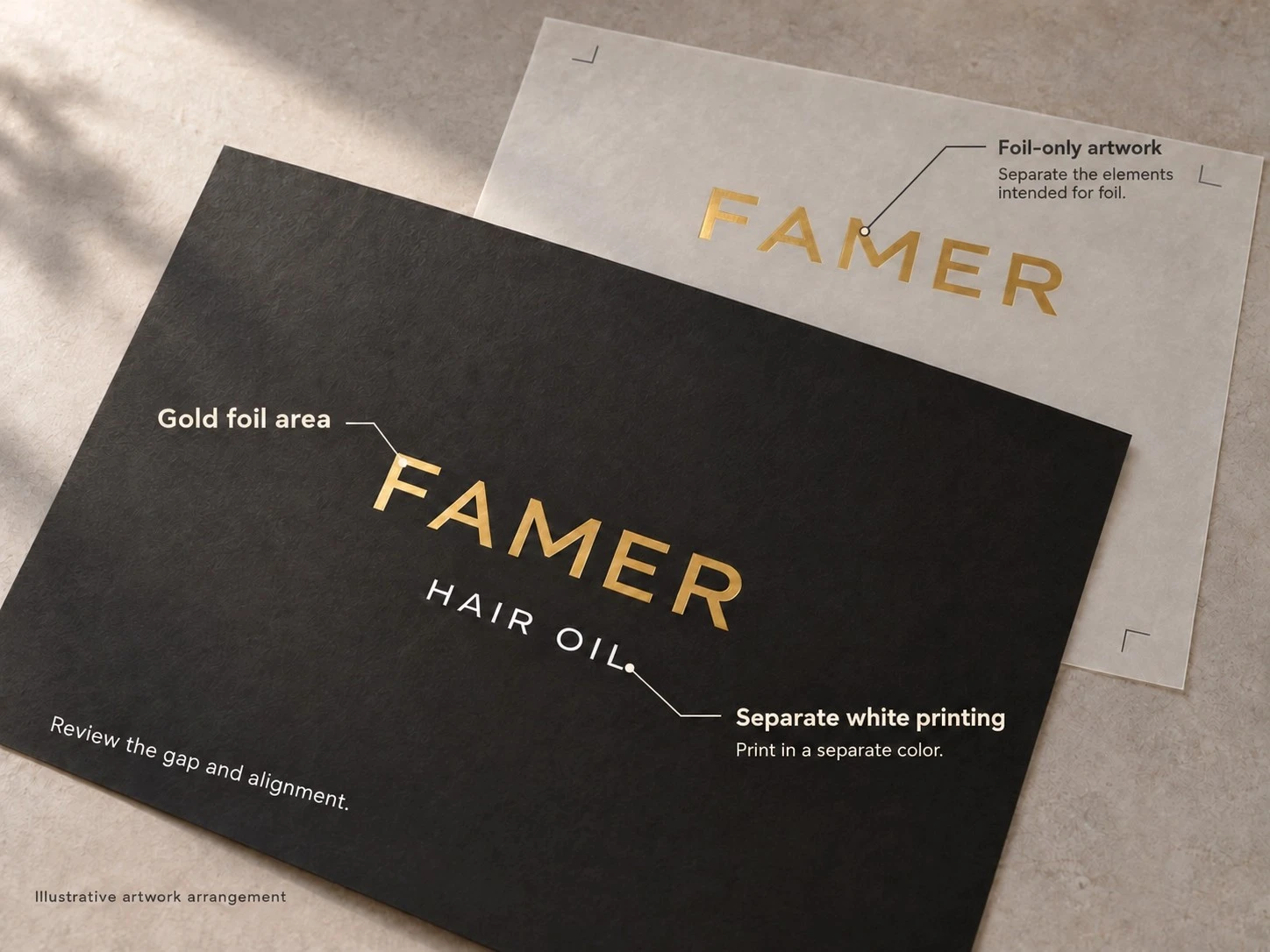
Review the spaces inside A and R at the final logo size, along with the gap and alignment between the gold and white elements. If the wordmark crowds the available area, simplifying the layout or changing its scale is more useful than squeezing in extra foil details. The final drawing should define the position and dimensions for the selected bottle.
From Artwork to a Decorated Sample
FAMER lists hot stamping among its decoration and printing options. Share the bottle reference, editable logo artwork and desired finish so a design discussion can address the actual component. Where foil and printing are combined, review the complete layout and decoration sequence together.
A decorated sample lets you examine the appearance on the bottle itself: transfer completeness, clean details, placement and alignment. For performance, define checks around the intended handling and any relevant formula contact. A hair-oil bottle may need assessment after contact with the actual product if spills or residue are expected in use.
Frequently Asked Questions
Can a matte-coated cosmetic bottle be hot stamped?
It may be possible with a compatible coating and foil. Include the planned coating in the decoration trial, since the foil must bond to that finished surface. Treat the bottle and its finish as one decoration specification.
Will hot-stamped lettering rub off?
Wear resistance varies with the foil system and exposure. Look for checks that represent normal handling and relevant product contact, with recorded conditions and acceptance criteria. Color and gloss alone do not establish durability.
What affects the cost of custom hot stamping?
Tooling, decoration area, artwork complexity, setup and quantity per design can affect the quotation. Compare offers for the same bottle and decoration specification. Multiple designs may require separate setup work even when they share one total order quantity.