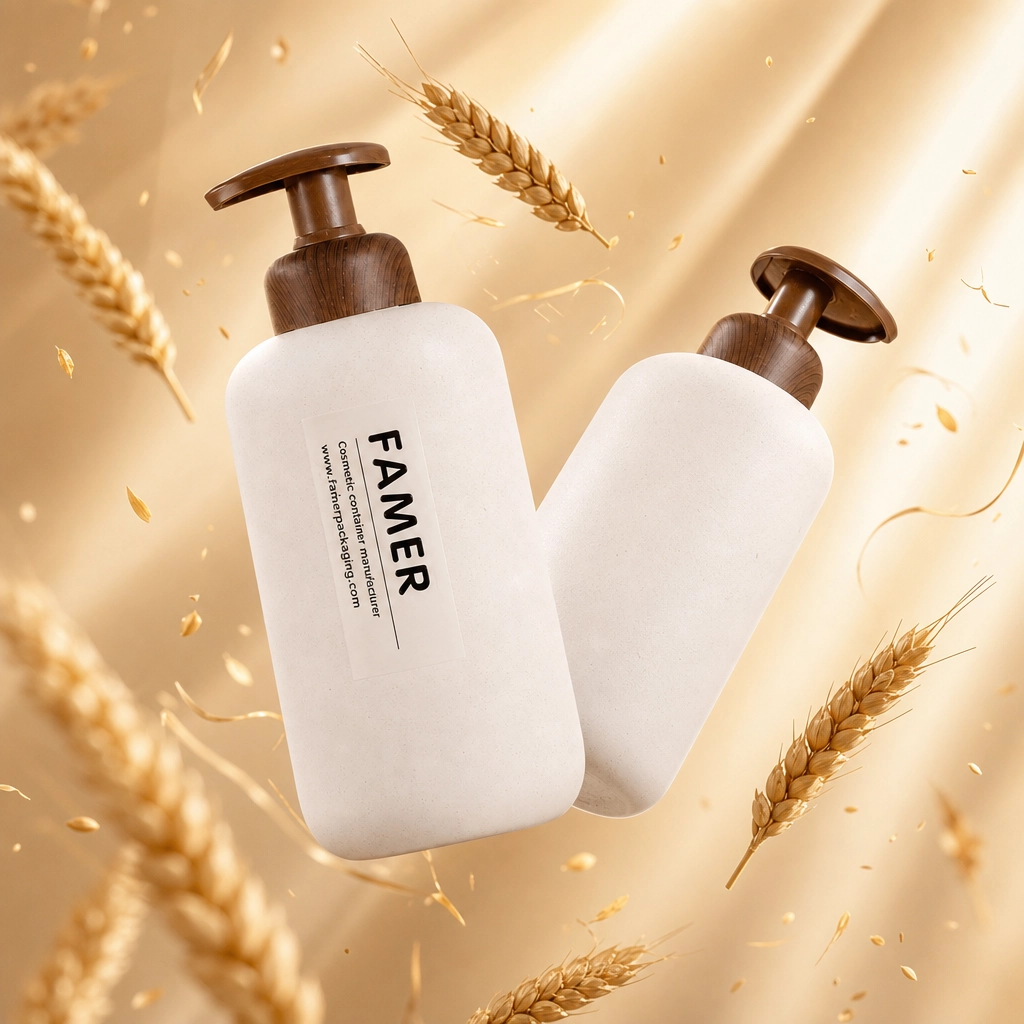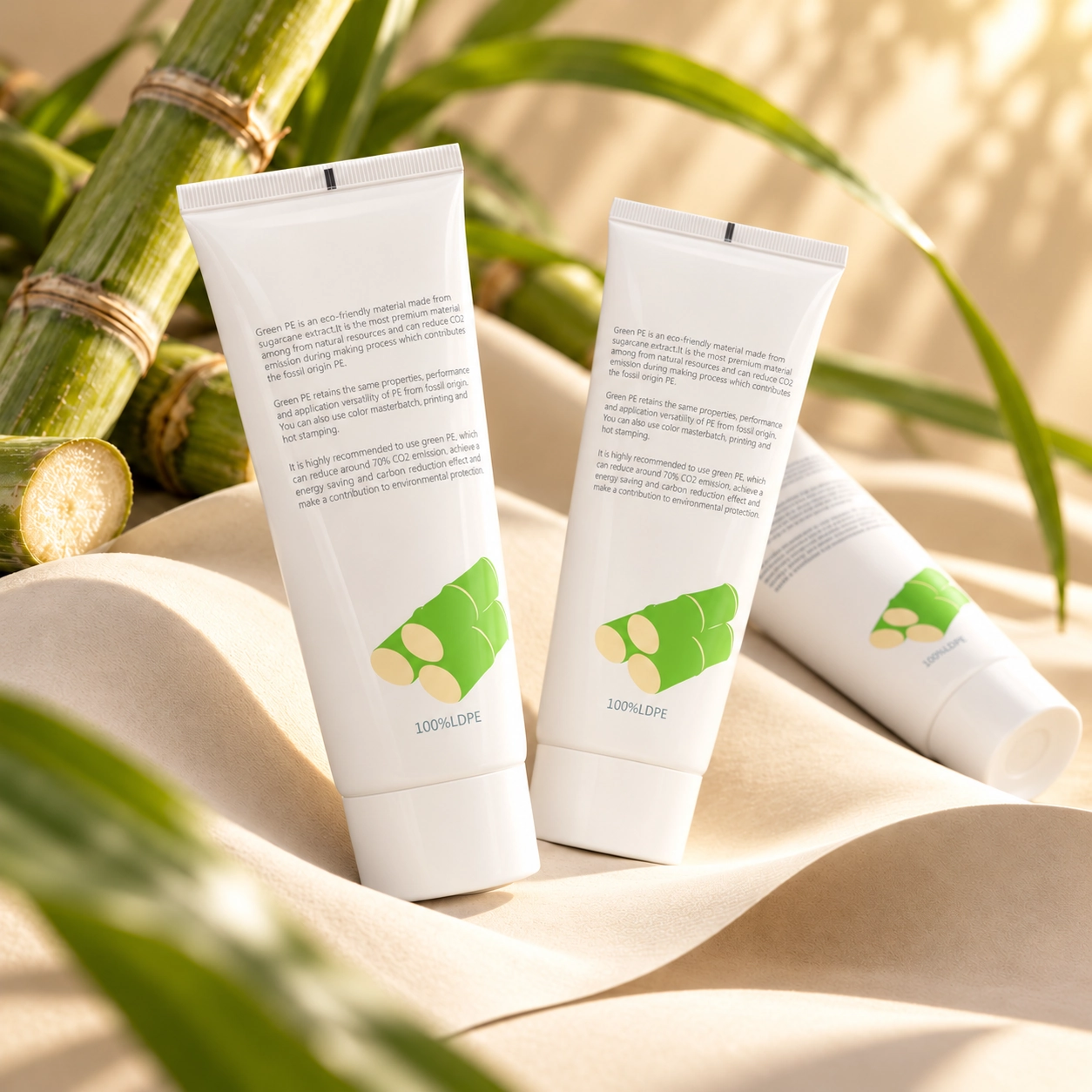


A sugarcane tube, a bottle containing wheat straw, and a tube marked "30% PCR" can all sound like similar packaging choices. They describe different things, though. Some labels tell you where the material came from; others tell you how it can break down after use.
Bio-based and recycled describe what goes into the packaging. Biodegradable and compostable describe how it breaks down under suitable conditions. A plant-based tube can still be ordinary PE plastic, and a recycled tube still needs a suitable collection route after use.
For a cosmetic brand comparing these options, understanding that difference makes it easier to choose a material and explain it clearly to customers.
The four terms at a glance
|
Term |
What it means |
What to remember |
|
Biodegradable |
Microorganisms can break down the material under certain conditions. |
It will not necessarily disappear quickly in soil, water, or landfill. |
|
Compostable |
The material meets requirements for breaking down in a specified composting environment. |
Industrial composting and home composting are different. |
|
Bio-based |
All or part of the material comes from biological sources, such as plants. |
Plant origin does not automatically make it biodegradable. |
|
Recycled |
The packaging contains material recovered from waste. |
Recycled content does not guarantee the package will be recycled again. |
These labels can overlap. For example, "bio-based" says nothing by itself about whether a bottle belongs in a compost bin. The European Commission makes this distinction between a plastic's raw material source and what happens after disposal.1
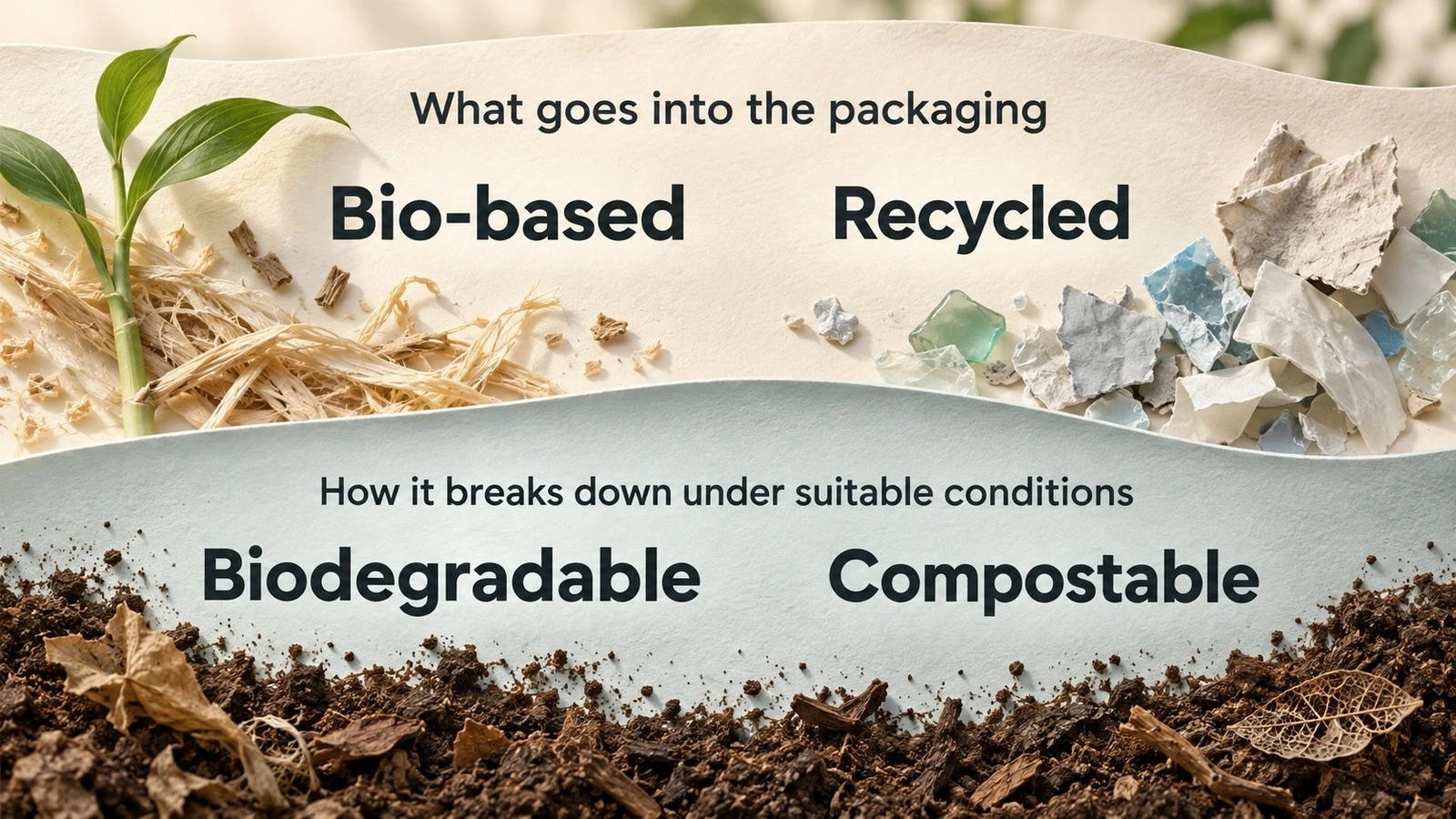
Biodegradable vs compostable packaging
"Biodegradable" needs a little more explanation than the word suggests. The conditions around the material affect whether it breaks down and how long that takes. A bottle described this way should come with information about the environment in which it can biodegrade.
"Compostable" is more specific. It involves breakdown under defined composting conditions, with requirements for the resulting compost as well. Simply cracking or breaking into small pieces is not enough.
Can it go in a home compost bin?
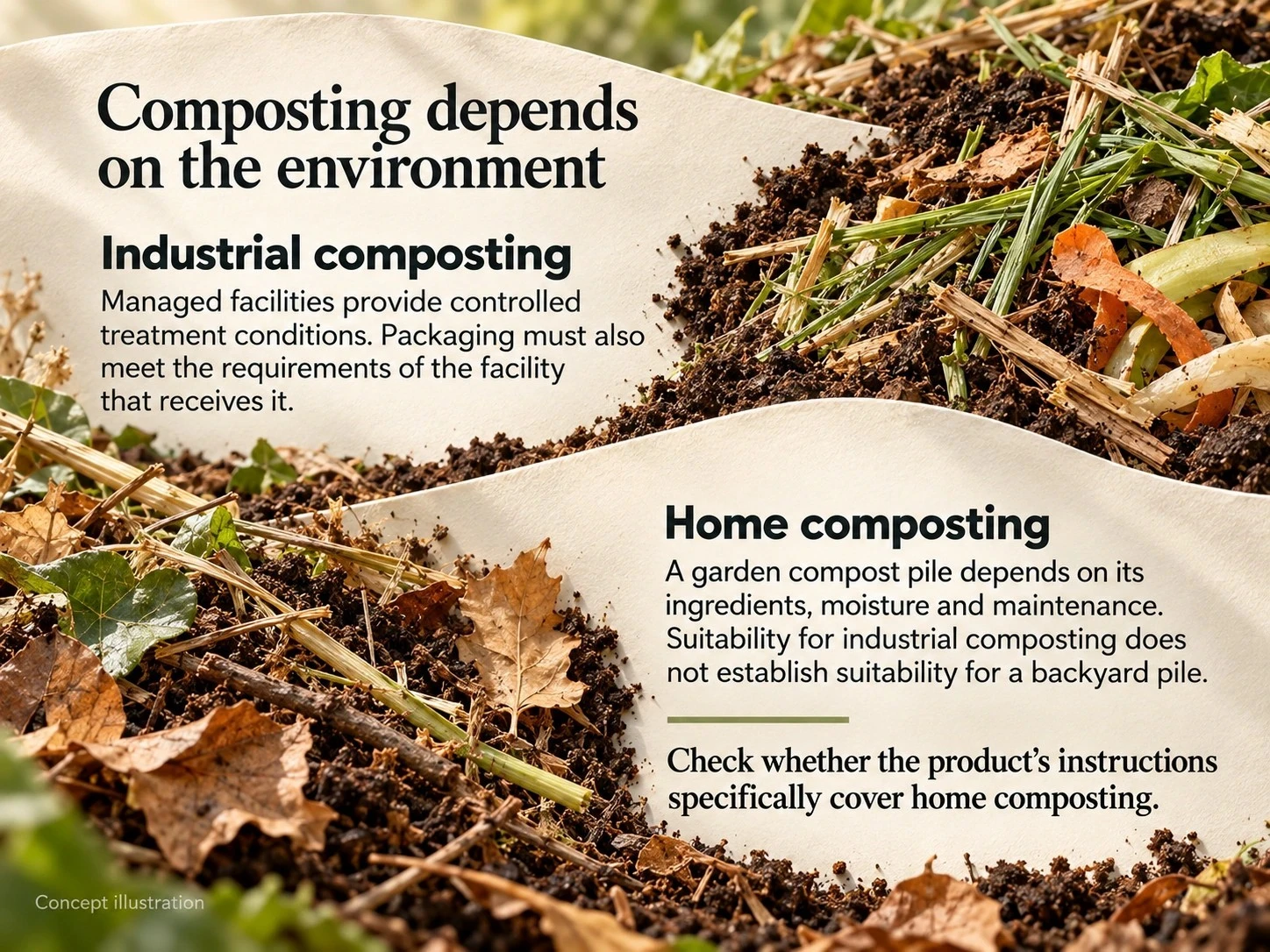
Industrial composting facilities provide different conditions from a garden compost heap. The US EPA advises against home-composting plastic unless it is explicitly labeled for that use. It also says compostable plastics should stay out of conventional plastic recycling.2
For a cosmetic bottle or jar, ask whether the compostability information covers the finished item and whether a local service accepts it. A statement about the bottle material may not cover its pump or lid.
This is especially relevant when considering PLA packaging. A material name alone cannot tell a customer where to dispose of a complete container.
Bio-based packaging through real product examples
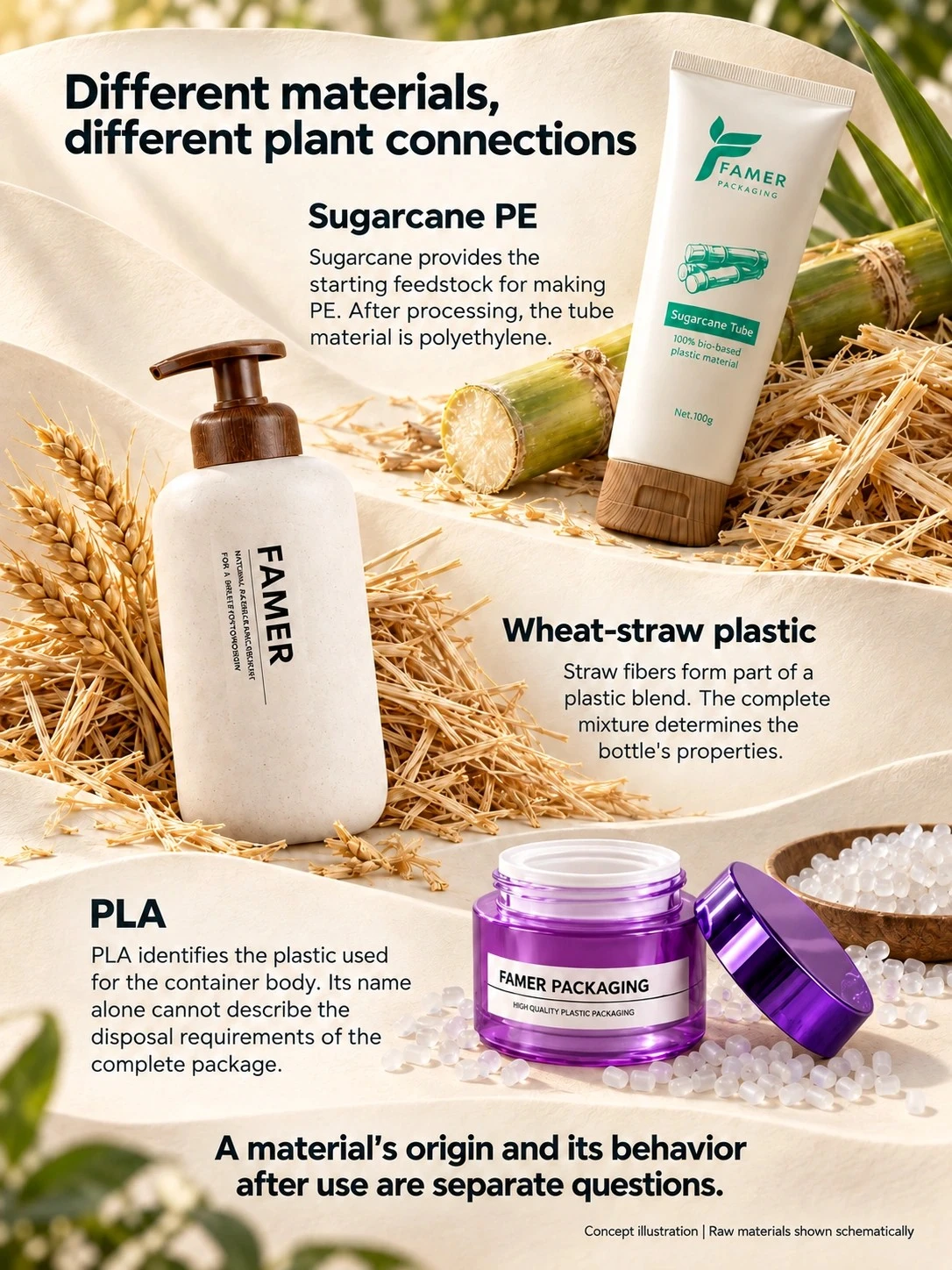
"Made from plants" can describe very different cosmetic packages. Sugarcane PE, wheat-straw-containing plastic, and PLA illustrate why it helps to know the actual material behind the label.
Sugarcane PE tubes
Sugarcane can provide the starting material for making polyethylene, usually shortened to PE. The finished material is still PE, the familiar plastic used in many cosmetic tubes. Its plant origin does not make it suitable for composting.
If you are considering a switch, our comparison of sugarcane PE and conventional PE explains what changes for the packaging and what still needs checking.
FAMER's sugarcane PE tubes show how this looks in practice. They have a familiar squeeze-tube format, so a brand can explore a different raw material source while discussing the tube shape and decoration it wants.
For the selected design, ask how much of the tube material is plant-derived. This gives the brand a more useful description than "made from plants" alone.
Wheat-straw cosmetic bottles
A wheat-straw bottle uses a plastic material containing plant fiber. FAMER's 500 ml pump bottle is an example of this approach. It gives brands a fiber-containing material option in a familiar bottle format.
The name does not tell you how much wheat straw is present or what the rest of the plastic mixture contains. It also does not mean the bottle and pump can be composted. Ask for the material details of the version being quoted, especially if the plant content will be part of the product's labeling.
Our closer look at wheat straw cosmetic packaging explains why the plastic mixed with the fiber matters when assessing environmental claims.
PLA bottles and jars
PLA is a different plastic from PE or PET. FAMER's purple PLA containers show that a different material can still look much like familiar skincare packaging. Clear walls, a glossy finish, or a particular color will not reliably identify the plastic.
If PLA is on the shortlist, evaluate it with the intended formula and closure. Any composting instructions need to apply to the actual finished product. The appearance of the bottle offers no shortcut to those answers.
Before choosing a container, see whether PLA is suitable for your cosmetic packaging, including the formula, filling and storage conditions worth checking.
Recycled vs recyclable cosmetic packaging
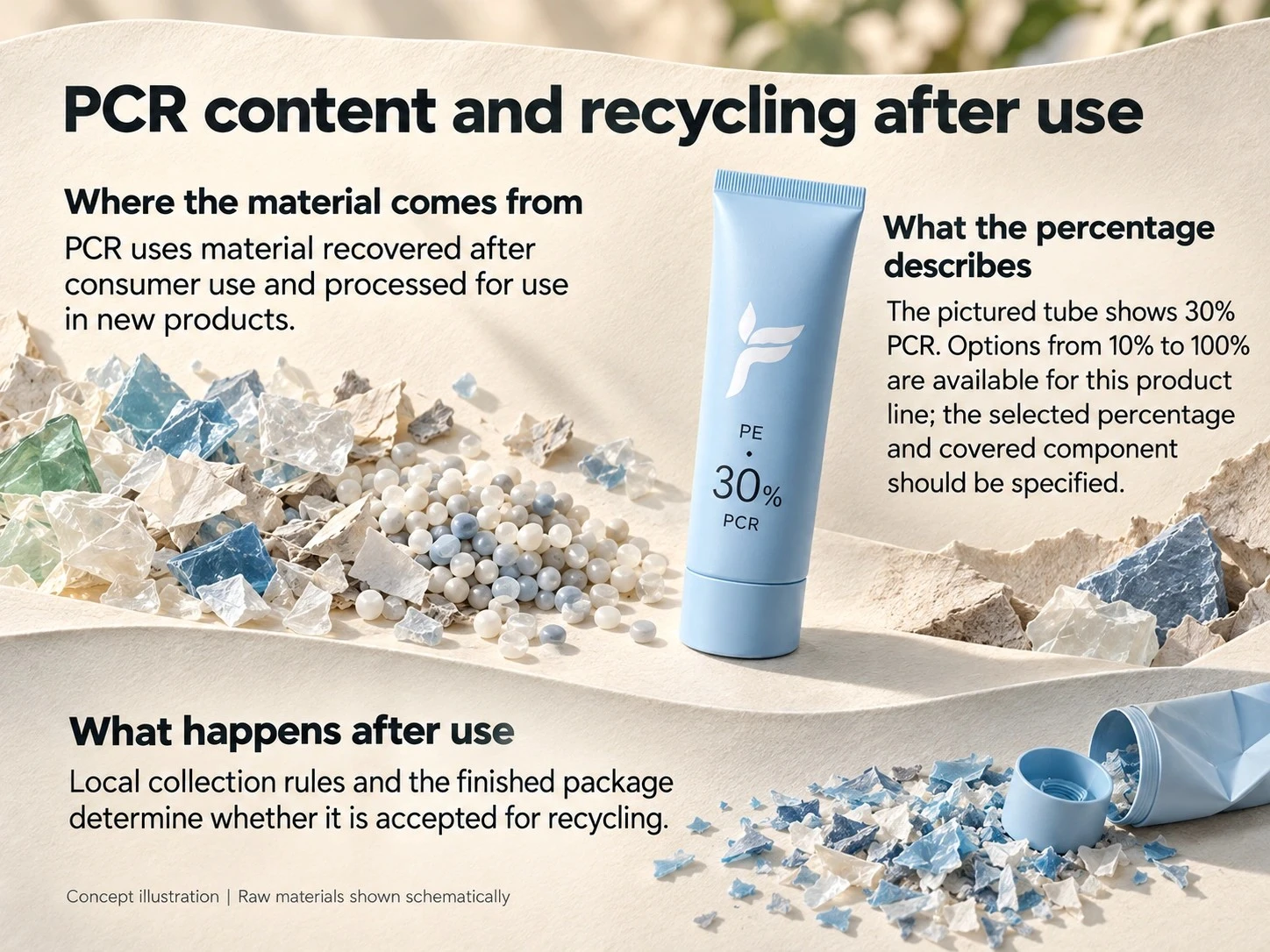
Recycled packaging contains material recovered from waste. PCR means "post-consumer recycled": material recovered after people have used and discarded a product. It is different from material recovered during manufacturing.
FAMER's pictured blue tubes carry a 30% PCR marking. For this product line, PCR content can be adjusted from 10% to 100%. The image shows one option; the percentage for an order should be agreed for the chosen tube.
The part covered by that percentage matters. A tube body containing 30% PCR does not tell you the cap's recycled content. The FTC's guidance calls for clear wording about the amount of recycled material and which part of a package it describes.3
Will it be recycled again?
That depends on the finished package and the collection system where it is sold. "Contains recycled plastic" describes its production history; "recyclable" concerns what can happen after the next use.
The US EPA recommends checking local collection rules. Even a plastic identification number on the package does not guarantee local acceptance.4
When choosing PCR packaging, discuss both the content you want to use and the disposal instructions customers can realistically follow.
For questions about color, plastic type and sample evaluation, our PCR cosmetic packaging buyer's guide takes the comparison further.
How to choose a material for your cosmetic product
Start with the change you want to make. If the goal is to use recovered plastic, explore PCR options. If it is to use plant-derived raw materials, sugarcane PE is one option to discuss. A composting goal requires a suitable finished product and somewhere that can accept it.
For example, a hand-cream brand comparing sugarcane PE with a PCR tube is choosing between two material sourcing approaches. The decision can begin with which objective the brand wants to explain on its packaging. Neither description, on its own, tells customers to put the empty tube in a compost bin.
The package still needs to work well with the formula. Before ordering, compare samples for the things customers will notice: whether the cream dispenses properly, whether the closure seals, and whether the finish looks right. Agree on suitable checks with the people developing and filling the product.
A bottle with a pump and a tube with a cap may need different checks, even if their bodies use the same plastic. Keep the intended format in the discussion from the start.
Ask for the supporting information that answers your actual question. For PCR, that might be the percentage in the tube body. For a compostable container, it is information covering the finished item and its intended composting route.
Discuss your packaging options with FAMER
Share the container type, capacity, formula type, and target market. If you have a PCR percentage in mind or want to explore a plant-derived material, include that in the brief.
FAMER can discuss the available configurations and provide a quote for a specific option. Comparing a defined tube or bottle is easier than choosing from a list of environmental labels.
Common questions
Is bio-based plastic always biodegradable?
No. "Bio-based" tells you about the raw material source. Sugarcane PE is still PE and should not be treated as compostable simply because it starts with a plant.
Does a natural-looking bottle mean it is compostable?
No. A beige color or visible plant fiber cannot establish compostability. The full material mixture and the finished package need to be considered.
Which option is best for a small cosmetic brand?
Begin with a suitable existing bottle or tube, then compare the available materials in that format. Ask how the chosen material and percentage affect the quote, decoration, and sampling requirements. This keeps the comparison focused on packaging the brand can actually use.
References
1. European Commission: Bio-based, biodegradable and compostable plastics. Definitions and the difference between material origin and breakdown after use.
2. US EPA: Plastic recycling and composting FAQ. Compostability, home composting, and disposal guidance.
3. FTC: Recycled content claims, 16 CFR §260.13. Recycled material sources and clear percentage descriptions.
4. US EPA: Frequent questions on recycling. Local collection rules and plastic identification numbers.