

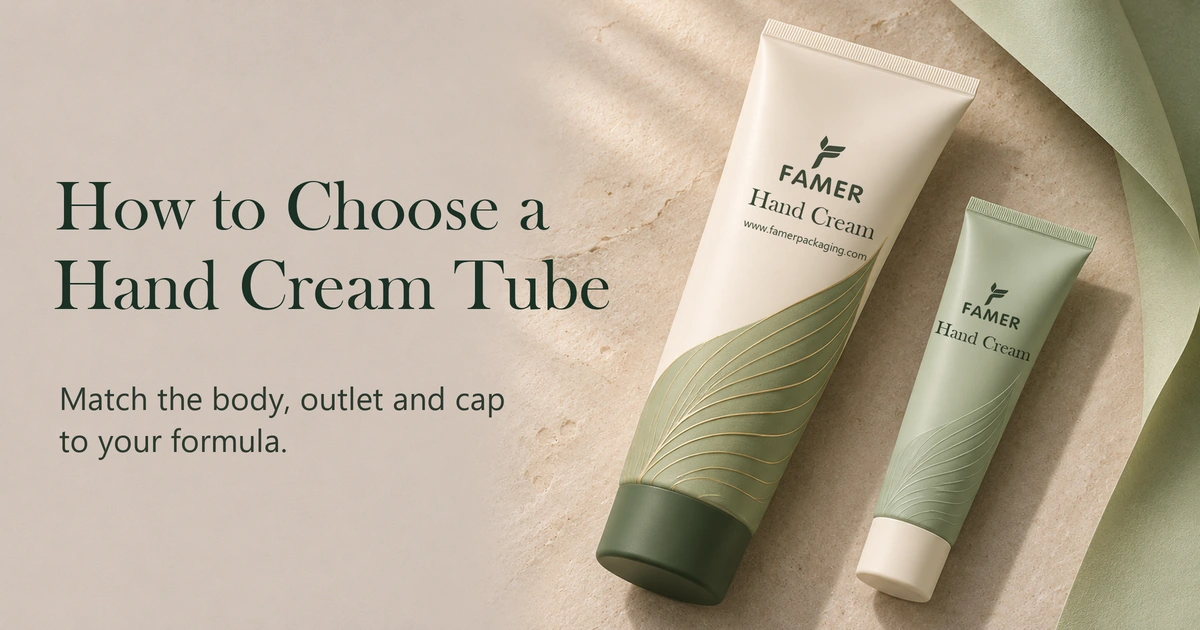
Start with your finished formula when choosing hand cream tube packaging. For a thick repair cream, look for a tube that starts dispensing with a comfortable squeeze and still lets the user stop at the right amount. For a lighter daily cream, check whether a gentle press gives a small, controlled portion. Once the tube and outlet work together, try opening and closing the cap the way people will use it.
What should a good squeeze feel like?
Hold a filled sample at the angle you would normally use and give it a short squeeze. Notice how hard you have to press before the cream starts moving. Then look at how much comes out and whether any cream continues to flow after you let go. A tube that feels easy to press can still deliver more cream than you want.
Some creams need a certain amount of pressure before they start to flow. Some also exhibit shear thinning, meaning their apparent viscosity drops as the rate of shear increases. This helps explain how a cream can hold its shape at rest and still flow through a suitable opening when squeezed. Study of cream flow and texture[1]
The tube body affects how easily you can compress the pack. The dispensing opening, or orifice, affects how readily the cream passes through. Compare candidates with the same finished formula, starting fill level and temperature. If you can change the opening while keeping the same tube body, you can judge what the change does to the squeeze and the dose. Types of cosmetic tubes and their construction
Match the tube body and outlet size to the formula
Thick repair cream - make the first squeeze easier
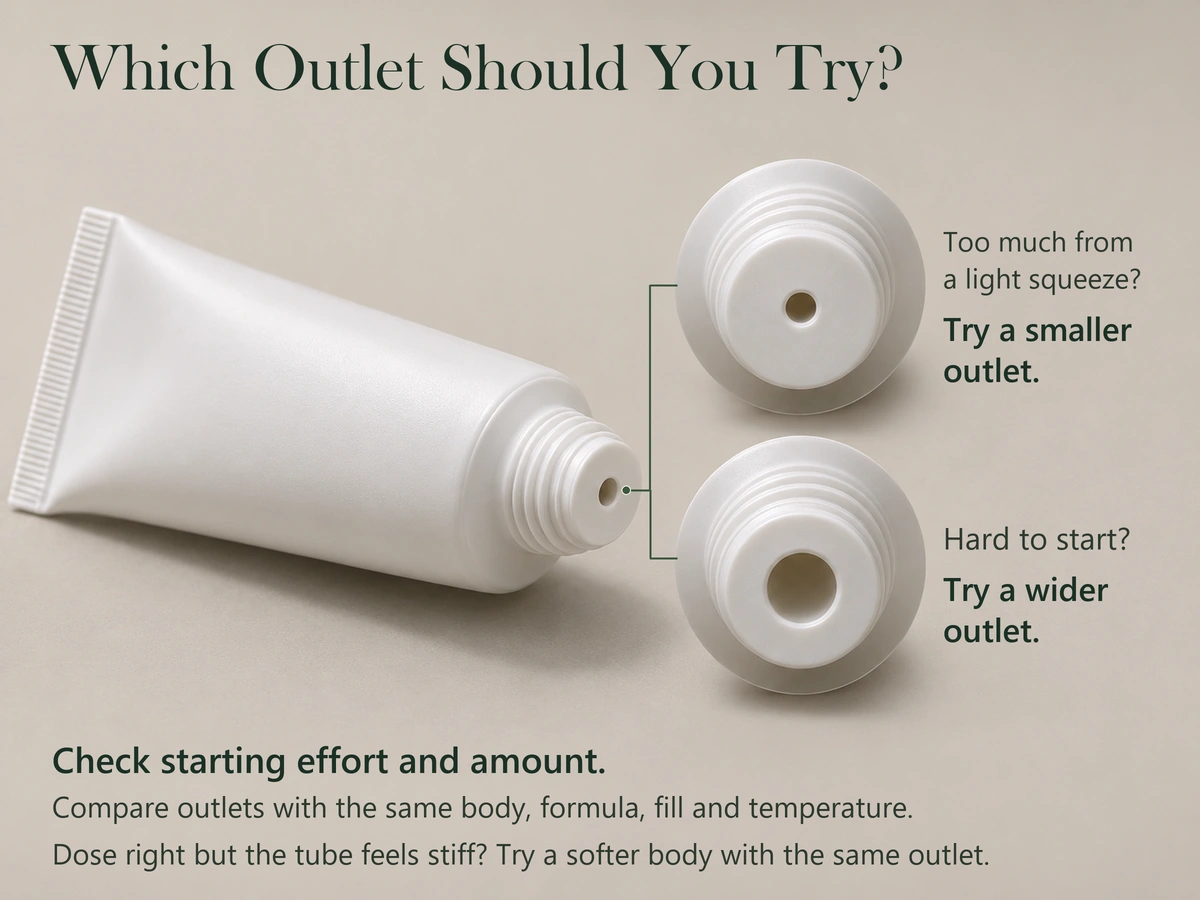
A thick repair cream can take a firm squeeze to get moving. By the time the cream appears, the user may already be pressing hard enough to dispense a larger portion than intended. Try a slightly wider outlet on the same body. First see whether the cream starts under a gentler squeeze. Then check how much comes out during a short press.
If the cream starts more easily but the portion is still too large, compare an intermediate opening if one is available. If the portion is right and the tube itself still feels hard to press, keep that opening and try a more flexible body. Test the squeeze feel on filled samples, since that is how the user will handle the tube.
If collapsible aluminum and aluminum barrier laminate are both on your shortlist, compare how each feels when squeezed and whether you want the tube to stay compressed or recover some of its shape. Aluminum tubes vs ABL tubes
Light daily cream - keep a small dose easy to control
With a lighter daily cream, the first squeeze may already feel easy. The issue shows up when a light press gives too much or a drop forms after release. Try a smaller outlet on the same body. Check whether you can dispense the amount you want with a short press and whether the cream still starts flowing comfortably.
Watch the opening before you squeeze and again just after you let go. If a drop forms while the open tube points down, record that separately from a trail of cream left by the squeeze. If the smaller opening helps but the amount still varies with small changes in grip, try a slightly firmer body with that opening. Use the filled samples to see whether it actually improves control.
Once the dose feels right, check whether the tube recovers its shape as you expect after several squeezes. If you are weighing different laminate bodies, consider shape recovery alongside the protection your formula needs. ABL vs PBL tube construction
|
What happens with the filled sample |
First change to try |
What guides the next choice |
|
Thick repair cream takes a firm squeeze to start, then comes out in a large portion |
Try a slightly wider opening on the same body |
If it starts more easily and still gives too much, compare an intermediate opening. If the portion is right and the body feels stiff, try a more flexible body. |
|
Light daily cream comes out too fast under a gentle press or forms a drop after release |
Try a smaller opening on the same body |
Check that a small dose is easier to control and that starting the flow still feels comfortable. Watch for drips after release. |
Once you know what you want to change, look for tube bodies that fit the project and ask which outlets and closures can be paired with them. Explore FAMER's cosmetic tube options
Choose a cap for how people use the tube
Try opening a flip-top while holding the tube in the same hand. Check whether your thumb can reach the tab and lift it without accidentally squeezing cream out. With a screw cap, try taking it off and putting it back after dispensing, when your fingers may be slippery. For both styles, check how easily you can tell the cap is fully closed.
If two caps fit the same tube and opening, use that setup to compare how they open and close. If switching caps also changes the opening, test each as a complete combination. Record both differences so you can weigh easier opening alongside any change in dose or residue.
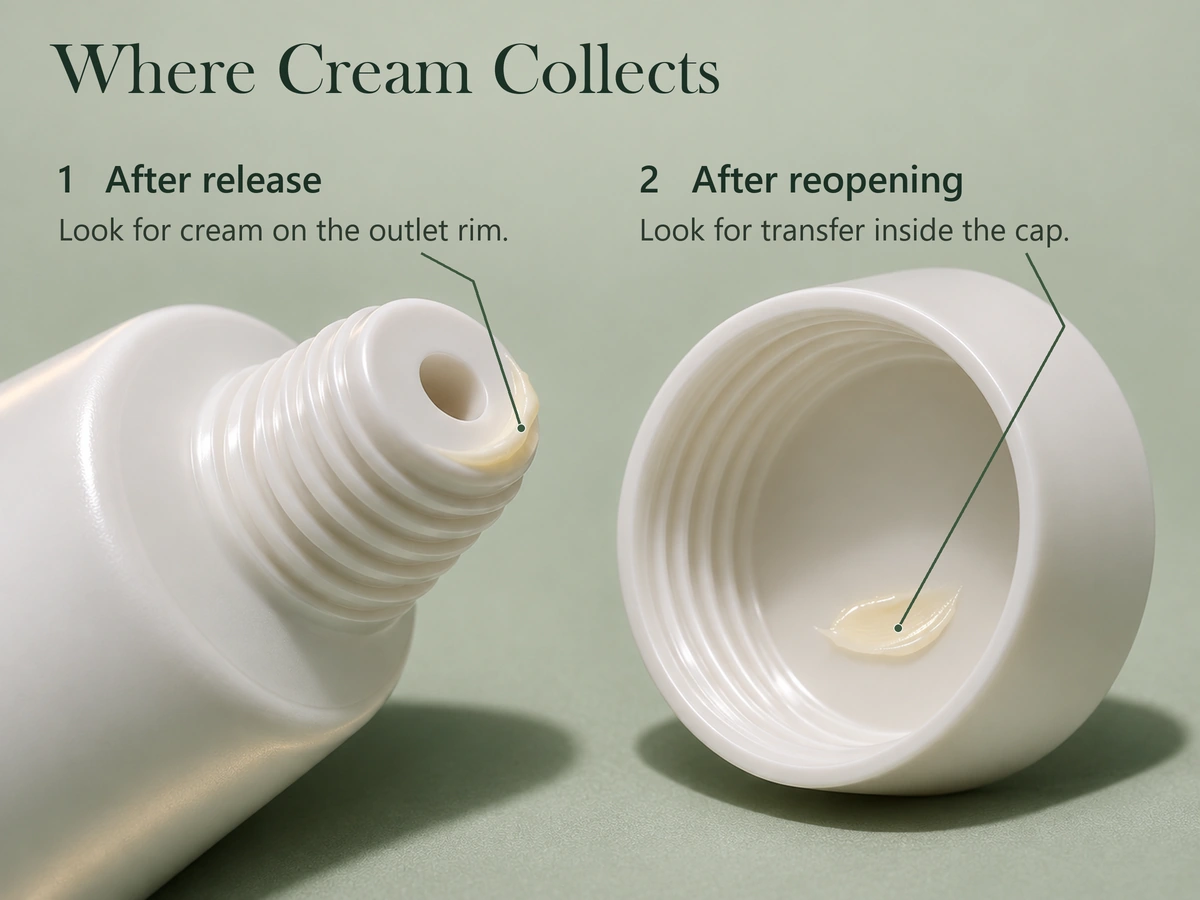
Start with a clean rim and lid, then open, dispense and close the tube several times. If cream builds up, watch one cycle closely. Does a trail stay on the rim when you release the tube? Does cream transfer to the inside of the lid as you close it? The first observation gives you a reason to look again at how the flow stops. The second tells you where to inspect how the lid meets the outlet.
Picture where the tube will be kept. For a 30 mL carry tube, check whether it is easy to grip and close securely before putting it back into a bag. For a 75 mL tube kept by a sink or on a desk, pay attention to repeated opening and closing. If it will stand cap-down, check that it sits steadily and try the first squeeze after storing it that way.
Confirm the combination with filled samples
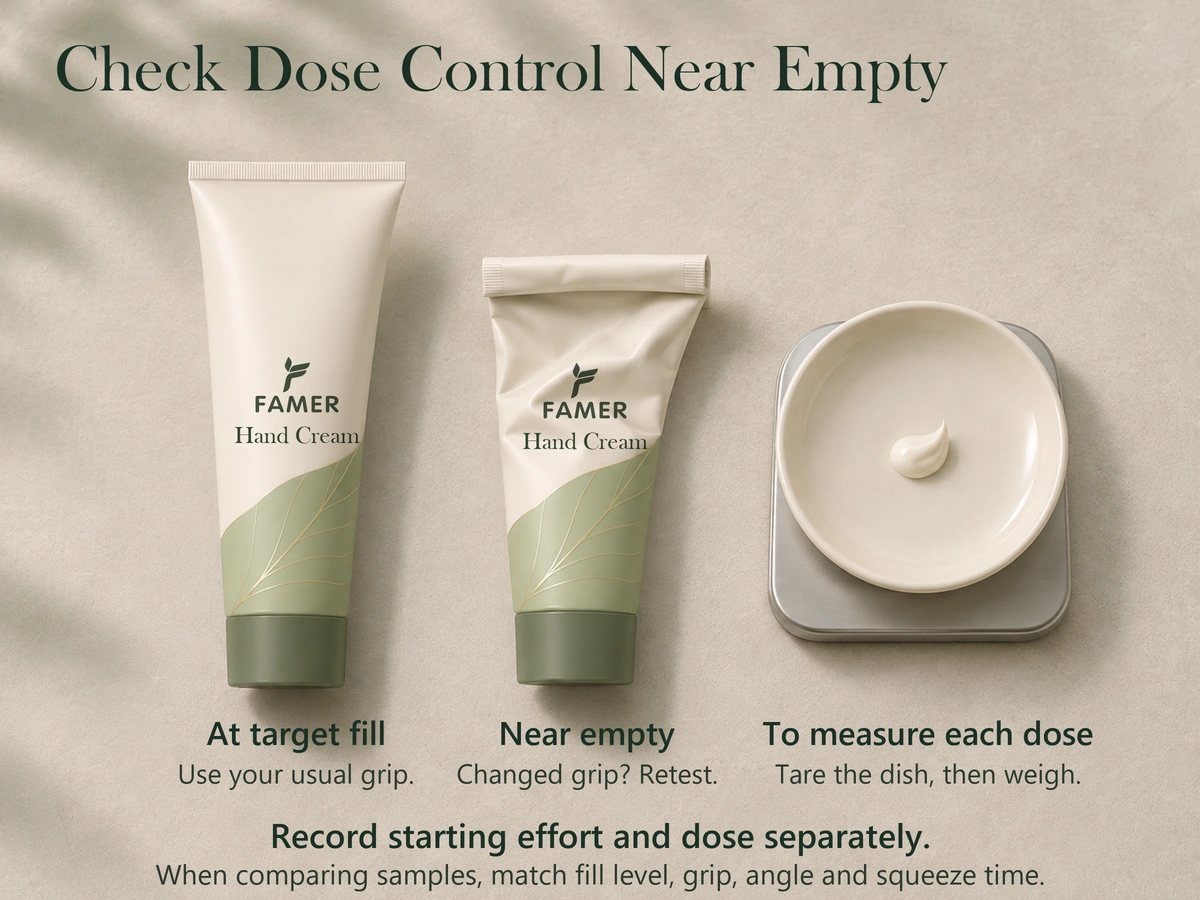
Try each finalist at the intended fill and again near empty. Pay particular attention to grip near the end. If you have to fold the tube or change where you press to move cream toward the shoulder, try dispensing again from that grip and see whether you can still control the portion.
For a simple dose comparison, use the same operator, grip position and tube angle. Agree on a short squeeze duration before you start, and compare samples at similar remaining fill levels. Record how hard it feels to start the flow separately from the amount dispensed. If the amount matters to the project, weigh several individual portions, zeroing the scale with the empty container before each one. Look at both the typical portion and how much it varies between squeezes.
Check for leakage at the closed cap and tail seal under the intended storage or carry conditions. Have the formulation team assess stability and compatibility in the finished pack using a protocol suited to the formula and its expected storage and use. ISO/TR 18811 cosmetics stability guidance[2]
When you brief a supplier, share your formula texture, target fill and preferred cap style. Include the dispensing behavior you want to improve, such as a gentler first squeeze or a smaller portion for frequent use. That gives the supplier a concrete basis for proposing samples.
Frequently Asked Questions
What outlet size should I try for a thick hand cream?
If your first sample takes a firm squeeze to start, try the next wider outlet available on the same tube body. Ask for the diameter of the opening the cream passes through. Test whether the wider opening lets you start with less effort and still stop at the amount you want.
Can a rich repair cream and a light daily cream share the same tube?
Yes, if the same body, outlet and cap work with both formulas. Fill and test each one separately. A small opening that gives the light cream a manageable dose may take too much effort with the thicker cream. Repeat the comparison near empty, when your grip may change.
Should I choose a flip-top or a screw cap?
Try a flip-top if opening the tube with one hand matters. Check that you can reach the tab without squeezing the body. For a tube carried in a bag, try closing each cap with cream on your fingers and check for leakage at the cap after carrying a filled sample.
How do I choose between a 30 mL and a 75 mL tube?
Use 30 mL as a starting point for a carry size and 75 mL for a tube kept at a sink or desk. Check the filled sample in the intended bag or storage space. If it will stand on its cap, make sure it sits steadily when full and near empty.
References
[1] Adejokun, D. A. and Dodou, K. (2020). Quantitative Sensory Interpretation of Rheological Parameters of a Cream Formulation. Cosmetics, 7(1), 2.
[2] International Organization for Standardization (2018). ISO/TR 18811:2018. Cosmetics - Guidelines on the stability testing of cosmetic products.