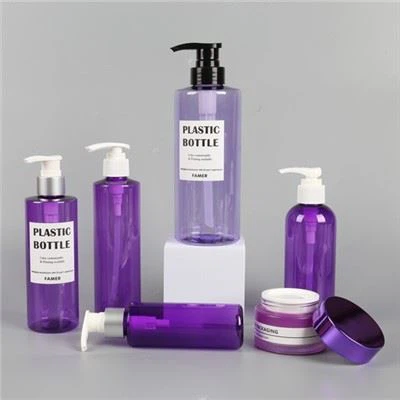


Yes, perfume can be packaged in a plastic spray bottle-but not every plastic bottle is suitable for every perfume formula.
Plastic can be a practical choice for travel fragrances, samples, discovery sets, body mists, and selected retail products. The decision, however, should not be based on the bottle resin alone.
A perfume formula remains in contact with the bottle, pump, dip tube, seals, and other dispensing components throughout storage and use. Formula composition, packaging materials, storage conditions, and intended shelf life can all affect package performance.
For a fragrance brand, the useful question is therefore:
Can this specific perfume formula remain stable and dispense consistently from this complete packaging system for its intended commercial life?
Quick Answer: When Can You Use a Plastic Spray Bottle for Perfume?
Plastic spray bottles can make sense when their functional advantages match the product format and the finished package has been evaluated with the intended formula.
Common applications include:
- travel-size fragrances;
- perfume samples and discovery sets;
- testers;
- promotional fragrance products;
- body mists;
- selected lightweight retail formats.
Glass is often a stronger starting option for premium fragrances, products intended for longer storage, or formulations where material compatibility is uncertain. It can also better support products where package weight, clarity, and a traditional premium appearance are part of the positioning.
Plastic vs. Glass at a Glance
|
Application |
||
|
Travel fragrance |
Practical when validated; lightweight and break-resistant |
Suitable but more vulnerable to breakage |
|
Samples / discovery sets |
Often practical |
Also suitable |
|
Body mist |
Common candidate depending on formula |
Possible but often heavier than necessary |
|
Premium retail fragrance |
Depends on formula and positioning |
Frequently preferred |
|
Longer-term storage |
Compatibility should be verified |
Generally a strong starting option |
|
Sensitive or unfamiliar formula |
Requires careful evaluation |
Often lower-risk as a bottle-material starting point |

"Requires validation" does not mean that plastic is unsuitable. It means that a resin name such as PET or HDPE is not enough evidence to approve a finished perfume package.
Why Perfume Packaging Requires Compatibility Testing
Perfume packaging has to do more than prevent obvious leakage. It must help maintain the formulation, retain volatile components, remain dimensionally stable, preserve sealing performance, and continue to dispense correctly.
Cosmetics Europe notes that packaging can directly affect cosmetic-product stability through interactions between the product, package, and external environment. Its stability-testing guidance specifically mentions adsorption, migration, chemical reactions, and container barrier properties, and recommends using packaging that is the same as-or as close as practical to-the intended commercial package.²
For perfume, three variables deserve particular attention.
Alcohol Is Only One Part of the Compatibility Question
Many fragrance formulations contain ethanol, sometimes at substantial concentrations. That makes alcohol compatibility relevant, but an "alcohol-resistant" material claim should not be treated as finished-package approval.
The actual result can also depend on:
- the specific resin and grade;
- fragrance composition;
- contact time;
- storage temperature;
- pump construction;
- seals and other formula-contact components.
A material-data sheet can help a brand screen possible packaging options. Final approval should be based on the finished formulation in the intended package.
Fragrance Formulas Are Chemically Complex
A perfume is not simply alcohol and water.
Fragrance concentrates may contain many aromatic compounds with different physical and chemical characteristics. Two perfumes with similar alcohol content may therefore behave differently in the same package.
This is why performance data from a previous fragrance project can be useful without being conclusive for a new formula.
A practical distinction for buyers is:
Material information helps select candidates. Testing the finished formulation helps validate the package.
Problems May Develop Over Time
A bottle that looks normal immediately after filling may not behave the same way after prolonged contact.
The main idea is simple:
Formula + packaging materials + time + storage conditions determine real package performance.

A same-day fill test can be useful for an initial screening, but it should not be confused with a commercial compatibility assessment.
What Can Go Wrong With an Incompatible Perfume Package?
The phrase "chemical compatibility problem" is too vague to guide a purchasing or quality decision.
A useful evaluation separates possible failures into three areas:
- changes in the fragrance;
- changes in the package;
- changes in dispensing or sealing performance.
Changes in the Fragrance
Interaction between a formulation and its packaging may affect the product even when the bottle still appears normal.
Potential observations can include:
- changes in odor or fragrance profile;
- unexpected color change;
- haze or visible appearance change;
- product or volatile-component loss.
Not every color or odor change proves that the packaging caused the problem. The formulation itself may be unstable. This is why comparison against an appropriate control can be useful when investigating a result.
Permeation, Product Loss, and Barrier Performance
Visible leakage is not the only route by which a package can lose product.
Barrier performance matters when packaging is expected to retain volatile constituents over time. Cosmetics Europe includes retention of water and other volatile product constituents among the packaging-related considerations relevant to stability.²
For a fragrance project, a testing program may therefore include baseline and checkpoint package weights where this is technically appropriate.
The purpose is not to apply a universal online pass/fail number. The brand should establish acceptance criteria that make sense for its formula, package, shelf-life target, and quality system.
Swelling, Softening, Distortion, or Cracking
Package incompatibility can also become visible in the container or other components.
Watch for changes such as:
- bottle distortion;
- material softening;
- component swelling;
- stress cracking;
- dimensional changes around the neck or closure interface.
Changes around the neck and sealing area deserve particular attention because they can affect pump fit and leakage even if the rest of the bottle appears acceptable.
Leakage and Dispensing Failure
A package can also fail without obvious damage to the bottle body.
Possible weak points include:
- the pump-to-neck interface;
- gasket or seal materials;
- dip tube components;
- closure fit;
- dimensional changes within the dispensing system.
This is one reason a perfume package should be evaluated as an assembled system, not as an empty bottle in isolation.
Practical Failure-Signs Checklist
During development, consider monitoring:
Package integrity
- leakage;
- distortion;
- cracking;
- seal condition;
- swelling or dimensional change.
Formula condition
- package weight change where relevant;
- color;
- odor;
- visible appearance.
Dispensing performance
- spray pattern;
- dose consistency;
- priming;
- dripping;
- pump sticking.
The exact test method and acceptance criteria should be defined for the project rather than copied from a generic compatibility checklist.
PET, HDPE, PP, or Glass: What Role Does Each Material Play?
There is no single material that is automatically "best for perfume."
A more useful comparison is to understand what each material contributes to the package and what still needs to be verified.
PET
PET is often considered when a brand wants a clear, lightweight, break-resistant plastic bottle.
Those characteristics can make it relevant for:
- travel fragrances;
- samples;
- discovery formats;
- body mists;
- selected retail fragrance sprays.
Its transparency can also support products where consumers are expected to see the formulation.
The limitation is not that PET is inherently unsuitable for perfume. The limitation is that PET compatibility cannot be established from the resin name alone. The finished formula and dispensing components still need to be considered.
HDPE
HDPE offers a different balance of properties.
It is widely used in packaging where toughness and chemical resistance are important, but its opaque or translucent appearance generally creates a more functional aesthetic than clear PET or glass.
For that reason, HDPE may be more relevant to selected body-care, functional fragrance, or personal-care formats than to a traditional transparent premium perfume bottle.
The same rule applies: general material properties help narrow the choice, but they do not replace product-package compatibility evaluation.
PP
PP is especially important because buyers should not think only about bottle-body materials.
In spray packaging, PP can also be found in components such as:
- actuators;
- pump housings;
- closures;
- other dispensing-system parts.
A PET bottle may therefore contain several formula-contact or functional components made from different polymers.
For sourcing teams, this changes the question from:
"What material is the bottle?"
to:
"What materials make up the complete bottle-and-sprayer system?"
Glass
Glass remains an important fragrance-packaging material because it is relatively inert and supports the clear, substantial presentation associated with many premium perfumes.
Its commercial trade-offs include:
- greater package weight;
- breakage risk;
- different shipping requirements;
- potentially more protective secondary packaging.
Glass also does not eliminate every compatibility consideration. A glass perfume bottle can still use polymer dip tubes, seals, pump housings, and other components that interact with the formula or determine dispensing performance.
Material Comparison
|
Material |
Clarity |
Weight |
Break Resistance |
Compatibility Approach |
Typical Role |
|
PET |
High |
Low |
High |
Formula-dependent; validate finished package |
Clear lightweight spray bottles |
|
HDPE |
Usually opaque/translucent |
Low |
High |
Formula-dependent; validate finished package |
Functional personal-care/fragrance formats |
|
PP |
Variable |
Low |
High |
Depends on grade and component role |
Pumps, actuators, closures and selected containers |
|
Glass |
High |
Higher |
Low |
Generally favorable bottle material; complete system still requires review |
Premium and longer-life fragrance packaging |
Use the table to shortlist candidates-not to replace testing.
The Bottle Is Only Part of the Package: Check the Sprayer
One of the easiest mistakes to make in perfume packaging sourcing is to focus entirely on the bottle resin.
A complete spray package may contain:
Bottle → Pump → Gasket / Seal → Dip Tube → Actuator → Cap

Each component has a different function, and several may contact the formula.
The broader packaging principle is well established: FDA container-closure guidance, although written for pharmaceutical products rather than cosmetics, defines a container-closure system as the packaging components that together contain and protect a product.³ The regulatory guidance is not being presented here as a perfume requirement; the relevant point is the system-level approach to package performance.
Fine-Mist Pump
For fragrance, package compatibility includes dispensing quality.
A pump should be checked for:
- atomization;
- spray pattern;
- output consistency;
- priming;
- dripping;
- sticking;
- performance after storage.
A pump that sprays correctly immediately after filling but performs poorly after aging has not demonstrated acceptable performance over the intended test period.
Dip Tube, Gaskets, and Seals
The dip tube remains in prolonged contact with the product and should be included in the material specification.
Seals and gaskets can be even more critical to package integrity. If a sealing component changes dimension or loses functional performance, leakage can occur even though the bottle itself remains unchanged.
That is why compatibility testing should use the assembled, filled package rather than treating an empty bottle test as finished-package approval.
How Should a Brand Choose Between Plastic and Glass?
Once technically unsuitable candidates have been removed, the decision becomes a combination of formula requirements, branding, logistics, and economics.
Evaluate these factors in roughly this order.
1. Formula Compatibility
This is the first decision gate.
If the package cannot maintain acceptable product and dispensing performance, weight, appearance, and price advantages become irrelevant.
2. Intended Product Life
A small discovery spray expected to be consumed relatively quickly has different packaging requirements from a full-size retail fragrance that
may spend much longer in distribution and consumer storage.
The intended commercial life should be reflected in the evaluation program.
3. Shipping and Breakage
For travel, e-commerce, samples, and wide distribution, weight and breakage can materially affect total packaging economics.
Compare more than the price of an empty bottle. Consider:
- freight;
- protective packaging;
- breakage;
- packing efficiency;
- assembly;
- finished-goods handling.
4. Brand and Decoration Requirements
A heavy glass bottle may support the tactile expectations of a premium fragrance. A lightweight plastic bottle may be a better fit for travel products, discovery programs, body mists, or other functional formats.
Decoration requirements also matter. Confirm whether the selected package supports the printing, labeling, coloring, coating, or other decoration required for the project.
5. Production Economics
The package should also be evaluated as a complete commercial system.
Consider:
- MOQ;
- tooling where applicable;
- bottle cost;
- pump cost;
- decoration;
- assembly;
- freight;
- secondary packaging;
- breakage risk
The lowest component price is not necessarily the lowest finished-package cost.
How to Evaluate a Plastic Perfume Spray Bottle Before Production
This is the point where a theoretical material choice becomes a packaging-development decision.
There is no single stability or compatibility test that can be applied unchanged to every cosmetic formula and package. European Commission guidance notes that cosmetic formulation-packaging interaction studies should use specific and relevant test conditions and states that there are no standard procedures applicable to all cosmetic products.¹ Cosmetics Europe similarly explains that manufacturers need to design stability testing according to the product category, package, and relevant failure criteria.²
A practical evaluation framework can follow five steps.
Step 1: Use the Actual Finished Formula
Water or a simplified alcohol solution may be useful for preliminary screening, but it cannot represent every interaction created by a finished perfume.
Before commercial approval, evaluate the actual intended formulation.
This is particularly important when fragrance concentrates vary significantly from one product to another.
Step 2: Test the Intended Complete Package
Use the configuration intended for production, including relevant components such as:
- bottle;
- pump;
- seal or gasket;
- dip tube;
- closure;
- decoration where it may affect performance.
Material data for the bottle resin should not be treated as equivalent to an assembled-package result.
Step 3: Select Relevant Storage Conditions
The evaluation should reflect the product's intended storage, transportation, and use conditions.
Depending on the company's protocol, this may include both real-time monitoring and accelerated conditions at defined checkpoints.
Avoid copying universal claims such as:
"X days at X°C equals Y years of shelf life."
Without a product-specific scientific basis, such rules should not be treated as automatic proof of perfume-package compatibility.
Step 4: Record Defined Failure Indicators
Record a baseline before aging, then check the same criteria at planned intervals.
A practical framework is:
Package integrity
- leakage;
- distortion;
- cracking;
- seal condition;
- dimensional changes.
Formula
- weight change where relevant;
- color;
- odor;
- visible appearance.
Dispensing
- spray pattern;
- dose consistency;
- priming;
- dripping;
- pump sticking.
The acceptance criteria should reflect the brand's product requirements, quality system, target market, and technical evaluation.
Step 5: Confirm Production-Representative Samples
Testing is most useful when the package being tested represents what will actually be supplied.
Before approval, confirm:
- bottle resin and grade;
- pump configuration;
- seal specification;
- dip tube;
- neck finish;
- decoration;
- assembly configuration.

If a formula-contact or functional component changes after validation, evaluate whether the previous test still represents the final production package.
Pre-Production Compatibility Checklist
Before approving a plastic perfume spray package:
Confirm the finished fragrance formulation.
Confirm bottle and dispensing-system materials.
Obtain assembled package samples.
Fill samples with the actual formula.
Record baseline appearance, weight where relevant, odor, and dispensing performance.
Store samples according to the defined evaluation plan.
Inspect package integrity at planned checkpoints.
Check formula condition at the same checkpoints.
Recheck spray performance after storage.
Confirm that the final production specification matches the tested package.
Insert a short, factual example from an actual fragrance or cosmetic spray project. Useful details might include the original package configuration, what issue appeared during evaluation, which component was changed, and what was re-tested before production.
Do not invent customer names, test results, failure rates, temperatures, or timelines.
Where Plastic Spray Bottles Are Especially Practical
Plastic becomes most attractive when its functional characteristics solve a specific packaging problem.

Travel fragrance: Lower package weight and resistance to breakage can be valuable, but leakage performance remains critical.
Samples and discovery sets: Lightweight small-volume packs can simplify distribution, while consistent spray output matters because users may judge the fragrance from only a few sprays.
Body mists and related products: Larger usage volumes, different price positioning, and different package-size expectations can make plastic a practical candidate when formula compatibility has been confirmed.
For conventional premium retail perfume, plastic or glass should be chosen according to the formula, brand positioning, expected product life, decoration needs, logistics, and package-validation results-not from a generic assumption that one material is always superior.
What Should You Ask a Perfume Bottle Supplier?
A useful supplier discussion should go beyond size, price, and MOQ.
Materials and Compatibility
Ask:
- What resin and grade are used for the bottle?
- Which materials are used in the pump, actuator, dip tube, and seals?
- Can assembled samples be supplied for formula testing?
- Will the bottle and sprayer be supplied as one defined configuration?
Changing a pump or seal while retaining the same bottle can still change package performance.
Fit and Dispensing
Confirm:
- neck finish;
- compatible pumps;
- available spray outputs;
- whether filled-sample spray evaluation is possible.
For perfume packaging, dispensing performance is part of the product experience.
Decoration and Production
Ask:
- Which decoration processes are compatible with the selected bottle?
- Are there minimum quantities for decorated components?
- Will production components match the samples used for testing?
- How are material or component changes contr
- olled?
Documentation
Where relevant to your project, request available documentation for:
- resin/material identification;
- package specifications;
- component specifications;
- quality requirements;
- production configuration.
These questions help move the sourcing process from:
"Do you sell perfume bottles?"
to:
"Can you supply a defined package that we can properly evaluate with our formula?"

Final Verdict: Can You Put Perfume in a Plastic Spray Bottle?
Yes. A plastic spray bottle can be suitable for perfume.
Plastic is especially worth considering for travel fragrances, samples, discovery formats, body mists, and other applications where low weight and break resistance are useful.
But the decision should not stop at "PET vs. glass" or "plastic vs. glass."
For commercial packaging, the more reliable process is to:
- shortlist materials based on the formula and product requirements;
- evaluate the complete bottle-and-sprayer configuration;
- test the actual finished formula under relevant conditions;
- verify package integrity and dispensing performance;
- make sure the production package matches the validated sample.
The best package is not simply the material with the longest list of advantages. It is the package that protects the formulation, dispenses consistently, supports the commercial positioning, and has been evaluated for the intended use.
FAQ
Q: Is PET suitable for perfume?
A: PET can be a candidate for some perfume and fragrance applications, particularly where a clear, lightweight, break-resistant bottle is useful. Suitability still depends on the finished formulation and complete dispensing system, so product-package compatibility should be evaluated before commercial production.
Q: Can perfume stay in a plastic bottle for a long time?
A: That depends on the formula, package materials, barrier performance, sealing system, storage conditions, and intended product life. A package intended for longer storage should be evaluated over conditions and checkpoints relevant to that commercial requirement.
Q: Can alcohol damage a plastic spray bottle?
A: Compatibility cannot be predicted from alcohol content alone. Polymer grade, fragrance ingredients, exposure time, storage conditions, and dispensing-system materials can all affect performance. A general "alcohol resistant" claim should therefore be treated as screening information rather than finished-package validation.
Q: Does the perfume sprayer material matter?
A: Yes. Pumps, seals, dip tubes, actuators, and other components may contact the formula or affect sealing and dispensing. Evaluating only the bottle resin can overlook important package failure points.
Q: Is glass always better than plastic for perfume?
A: No. Glass is a strong option for many premium and longer-life fragrances, but it is heavier and more vulnerable to breakage. Plastic may be preferable when portability, distribution efficiency, or impact resistance carries more weight in the product brief.
Q: Should perfume samples use plastic or glass?
A: Either can work. The decision should consider formula compatibility, brand presentation, distribution method, spray quality, expected use period, and finished-package economics.
References
1. European Commission - Commission Implementing Decision 2013/674/EU: Guidelines on Annex I to Regulation (EC) No 1223/2009 on the Cosmetic Product Safety Report.
The guidance discusses packaging-material characteristics, interaction between the formulation and packaging, barrier properties, migration, and the need for formulation-packaging suitability studies under relevant conditions.
2. Cosmetics Europe / CTFA - Guidelines on Stability Testing of Cosmetic Products.
The guidance states that packaging can affect finished-product stability through product-container interactions and barrier properties. It also recommends testing packaging representative of the commercial pack and considering factors such as odor, appearance, container changes, weight changes, orientation, and real-time confirmatory monitoring.
3. U.S. Food and Drug Administration - Container Closure Systems for Packaging Human Drugs and Biologics.
This pharmaceutical guidance defines a container-closure system as the packaging components that together contain and protect a product. It is referenced here only to illustrate the general system-level packaging concept; it is not a perfume or cosmetic regulatory requirement.